
Introduction to Network Resilience
In a world where businesses rely heavily on online platforms, network disruptions can create significant challenges for maintaining operations. From natural disasters to cyber-attacks, these incidents can bring down entire networks, leaving organizations scrambling to recover.
Yet, some websites have developed systems that allow them to remain accessible even during these disruptions. This is done by combining emerging technologies and active planning that puts the emphasis on availability and reliability.
Through the implementation of major strategies and the use of improved infrastructure, these sites will ensure the interruptions will not affect the performance or user experience. Understanding the principles of the operation of such approach can be useful bits of information when it comes to establishing a more credible internet presence.

Distributed Systems and Their Role
Distributed systems are based on the dispersion of resources and tasks to different locations or nodes and this enables the distributed system to effectively cope with disruptions. Unlike centralized systems that rely on a single point of failure, distributed systems remain functional even when individual components face issues.
The design strategy offers a high degree of reliability and guarantees continuous operations of websites. Distributed systems are able to redistribute tasks rapidly by redistribution of workloads across several servers, and this keeps the systems functioning without hiccups in case there is some unforeseen network outage.
Scalability is also supported by these systems as they allow websites to support the increased user demands without affecting their performance. For example, when a sudden spike in traffic occurs, distributed systems can efficiently distribute the load across their network, preventing slowdowns or crashes.
These clouds computing solutions such as Microsoft Azure and AWS have been critical in supporting the delivery of this solution by providing them with the tools that can help businesses to scale and control resources on the worldwide platform.
The other advantage is that they can coordinate information in remote locations. This means that users will always be in touch with the updated information no matter where they are and which section of the system is not online at any given time.
More so, the incorporation of monitoring systems can be used to ensure that these systems identify problems on a real-time basis and promptly respond to a possible failure. This form of nimbleness and responsiveness underscores the need to have distributed systems to ensure websites run efficiently even when there is a crisis.
Data Redundancy and Backup Strategies
The redundancy of data will make sure that the essential information will be available when the systems fail. Storing different copies of data in different physical or virtual locations helps businesses to minimize losses of important information in case events occur.
New techniques of replication like real time synchronization enable the data to be continuously updated in all the storage points enabling smooth access of the latest versions. Besides replication, it is necessary to have regular backups to establish recovery points that will allow systems to be relocated to a functional position after disruptions.
Modern backup solutions often include automated scheduling to ensure frequent updates without requiring manual intervention. Off-site storage adds an extra layer of protection by safeguarding data in geographically separate areas, making it less vulnerable to localized issues.
Incremental backups, which save only changes made since the last backup, help reduce storage space requirements while maintaining comprehensive records.
Another effective practice is implementing failover systems that automatically switch to secondary data sources if the primary system becomes unavailable. These systems play a vital role in the support of functionality and reduction of interruptions to services.
These strategies combined with encryption will make sure that the data is secure even when it is stored and sent. Businesses can also save a lot of time and offer a viable access to their data by planning how to cope with possible problems with the help of the well-planned redundancy and backup policy.
Content Delivery Networks (CDNs)
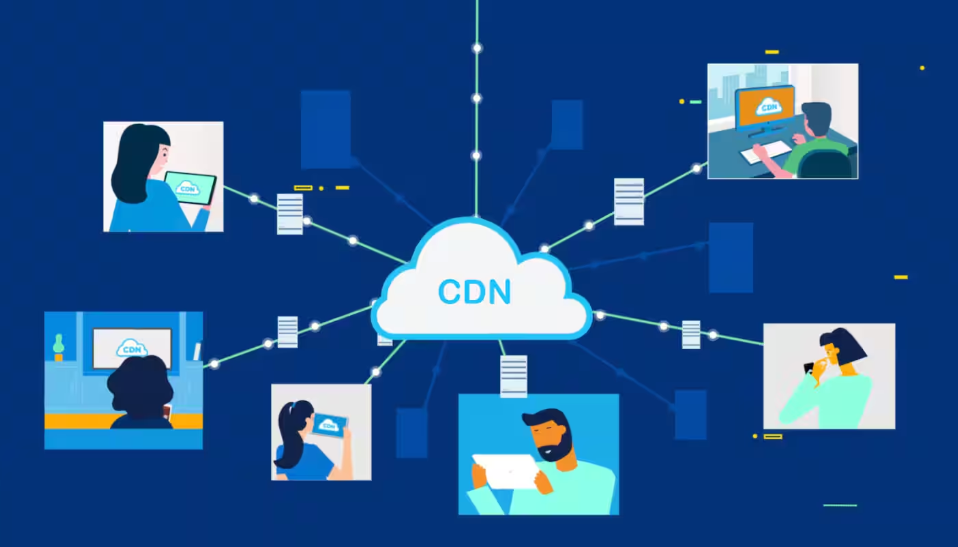
Content Delivery Networks (CDNs) enhance website performance by distributing content through a network of servers strategically positioned across various locations. This design helps minimize delays and ensures users can access data more quickly, regardless of their geographic location.
CDNs store cached copies of website content on multiple servers, which reduces the reliance on a single origin server. When users request content, the nearest server delivers it, significantly improving load times and reducing strain on primary infrastructure.
During unexpected network issues, CDNs can continue providing cached versions of content, allowing websites to function even when core systems experience interruptions. This feature has ensured that users are able to continue using important features and information and have a positive user experience. The CDNs as well contribute to the management of the traffic spikes by spreading the load among the different servers so that the slowing down or crashing of the servers during peak seasons can be averted.
Moreover, most CDNs have security options that are embedded in them, including countering Distributed Denial of Service (DDoS) attacks, through the absorption and suppression of malicious traffic. Akamai and Cloudflare are companies that offer sophisticated CDN services that can be easily combined with other resilience measures. These systems scale the websites effectively and minimize their susceptibility to network interruptions and security risks.
Adaptive Load Balancing
Adaptive load balancing optimizes server use by dynamically managing incoming traffic across multiple resources. By analyzing real-time server performance and traffic distribution, this method ensures consistent availability and prevents overloading.
For example, if one server experiences high demand, traffic can be rerouted to another with more capacity, maintaining smooth operation. Various algorithms, such as least connections or IP hash, are used to determine the most efficient way to allocate resources based on current conditions.
This system not only improves performance but also increases fault tolerance. If a server fails or becomes unreachable, adaptive load balancers can seamlessly redirect users to functioning servers without interruption.
This comes in handy especially when there are large crowds or partial interruptions when stability is paramount. Moreover, predictive analytics are introduced to many adaptive systems to predict possible problems and correct traffic flow in advance to reduce the risk of downtime.
Adaptive load balancing increases the ability to be flexible and scaleable by integrating with either cloud platforms or on-premises infrastructure. It enables websites to deal with the changing needs, e.g. seasonal high demands or promotional activities, without affecting the speed or reliability. The sophisticated systems have the ability to even integrate load balancing with safety measures giving an added security against illicit operations besides making sure that the resources are properly utilized.

Cybersecurity Measures
Cybersecurity is a sensitive feature of maintaining websites in operation in the event of disruption. The deployment of multi-layered defenses, which involve the deployment of tools such as firewalls and intrusion detection systems, to track and prevent unauthorized access, is one of the effective strategies.
Software updates and patch management should be conducted regularly to deal with the vulnerabilities that may be used by attackers. Additionally, segmentation of networks can help isolate critical systems, reducing the risk of widespread damage in case of an intrusion.
Multi-factor authentication which is a type of secure authentication is very important in deterring unauthorized access through having several verifications. Coded communication channels also offer an added security to sensitive information when it is being transmitted since information is still safe even in case of an interception.
Real-time threat detection vigilant tools enable organizations to detect suspicious activity at its initial stages and respond promptly to minimize the risk of suffering losses due to poor actions. Among the services offered is the Security Information and Event Management (SIEM) systems, which analyze the data of different sources to determine the pattern that could lead to a possible threat.
The other important element is employee training because human error can be a cause of cyber incidents. Businesses can reduce vulnerabilities by informing the staff on how to detect phishing attack and adhere to security best practices. Diverse cybersecurity strategy can guarantee that systems are not vulnerable to external and internal threats even in the most difficult situations.
Real-World Examples
Real-world scenarios reveal the effectiveness of resilience strategies in action. In 2021, Netflix maintained uninterrupted streaming services during a significant outage by leveraging its globally distributed infrastructure. This was done so as to guarantee content delivery and to not overload any one system, despite the issues that parts of the network experienced.
Equally, Spotify is operating on decentralized systems to ensure the smooth operation of the platform to enable users to access music without the disruption of the platform even in cases where some component is prone to trouble.
These strategies also favor e-commerce sites. Adaptive load balancing is applied in Amazon services which allow the website to handle heavy traffic on peak shopping occasions such as Black Friday without crashing down or becoming slow.
The other example is Cloudflare that secures websites and prevents malicious traffic and Distributed Denial of Service (DDoS) attacks with its high-technology CDN services and security protocols. These steps enable the businesses to remain operational and deal with threats instantly.
The gaming platforms like Xbox Live and Steam have also adopted similar measures and use redundancy and distributed networks to minimize the downtime. This will guarantee players all over the world of constant access even when there are huge traffic jams.
Such examples can underline the relevance of the integration of new technologies and thinking in ensuring that the websites are operational at all times even when the network suddenly fails.

Conclusion: Building a Robust Digital Presence
High internet presence needs some intelligent plans to cope with sudden inconveniences and reliability. A blend of modern technology and proactive strategies is used, as it makes the sites available even at tough times. One of the priorities may be given to the flexible and scalable solutions to help businesses cope with the rising demand and mitigate potential risks.
The focused attention to the efficient allocation of resources and the sufficient infrastructure will enable the organizations to minimize the downtimes and offer the people with the stable user experience.
The possibility of introducing the instruments offering real-time tracking and automatic changes also leads to the ability of a web page to survive unanticipated issues. Implementation of security in preventing external attacks and data breach will protect functionality and user confidence.
Moreover, in line with the changes in the future, such as artificial intelligence, the technological activity can be adjusted to the upcoming trends and facilitate quicker responses to possible issues.
Through proper planning and use of emerging technologies, the firms can create a secure and trustworthy online environment. Not only does this save operations and therefore ensure customer confidence; it also makes organizations survive even in unpredictable situations. The current digitalized world demands the creation of resilience to achieve success in the long-term.