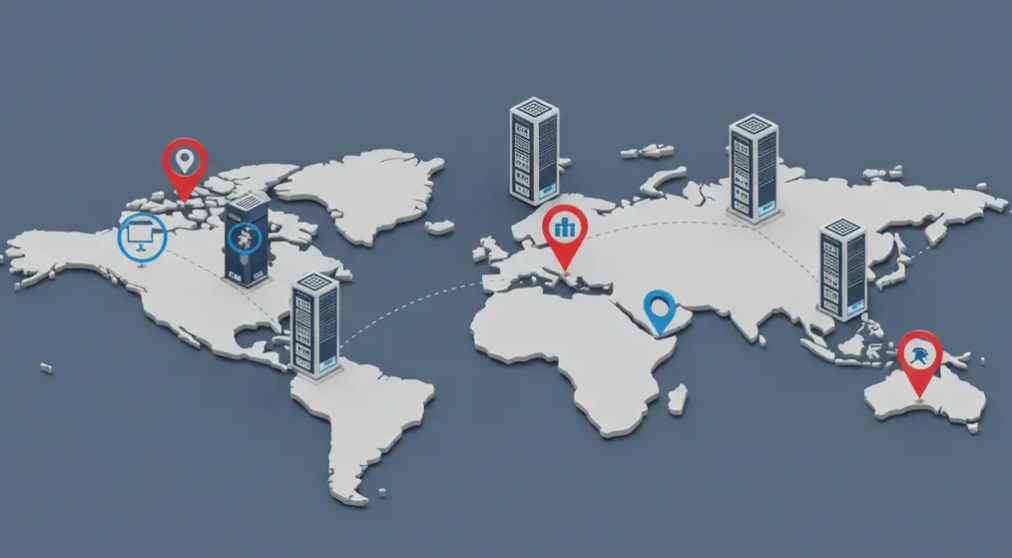
Introduction to Server Location Selection
Choosing server locations is a crucial decision that significantly impacts the effectiveness and dependability of online services. The process involves evaluating different aspects such as user distribution, technical needs, and business priorities. The number of Internet users is increasing worldwide, and it is important that the servers are located to serve the need of a geographically-diverse user.
Latency, connectivity, and compliance must be taken into account from the get-go to ensure businesses optimize their infrastructure for performance. By using the data-driven approach, you can strategically position servers to best match user usage and avoid guesswork and optimize the allocation of server resources.

Understanding Real-World Traffic Patterns
Traffic analysis can be employed to determine where your users are coming from and how they’re using your services. You can use metrics such as Google Analytics to segment visitors and find out which areas are active enough to be important.
Session duration, bounce rate, and geographic heat maps will allow you to see how long your visitors are spending on your site, how they are interacting with your content and where they are coming from. Be familiar with parts of the application where there is more activity and where the server proximity can assist in performance improvement.
Take into account traffic patterns, particularly those that differ by day of the week, day of the year or region. For instance, if certain areas are prone to heavier activity at specific times of day, you may want to place servers in these locations to ensure better responsiveness and reliability. Also, one should keep an eye on the Traffic of emerging markets which could be moderate at present, but increasing with an upward trend.
But it is not only about the volume, it’s also important to understand what kind of content or service is likely to be used by your users. Media-intensive applications might need faster response times in data-intensive areas, while transactional applications might focus on optimizing the server in buying-intensive areas. When this detailed information is analyzed, you can make informed choices when deciding where to locate your servers with the aim of improving user experience, particularly for different customer types.
Evaluating Latency and Connectivity
When deciding on server positions, think about the effect that geographical distance will have on data transfer times. Nearly always, the nearer to the user, the quicker the load time, especially when real-time interaction is important. Check the Internet infrastructure of the area in which the performance will take place to see if it will suffice your needs. A well-connected space can even help minimize delays and provide a seamless experience to users, even during busy times.
Also, look into peering agreements, and Content Delivery Networks (CDNs), as other forms of connectivity. These networks can be used to route data through the network more efficiently, which means that it can be sent and received without experiencing any delays, even if your servers are located far from home. Redundancy solutions also need to be considered in the region to ensure continuity of operation.
In addition to the above, there are redundant connections to ensure that services are not interrupted in the event of network problems, which further increases reliability.
Consider undersea cables or other international data flow connections which might have variations in data flow speed when determining connectivity. These resources may not work as consistent as they would in other locations where they may be less accessible. Tools can be used to simulate connection performance from various areas in order to identify the best available server positions.
Assessing Legal and Regulatory Considerations
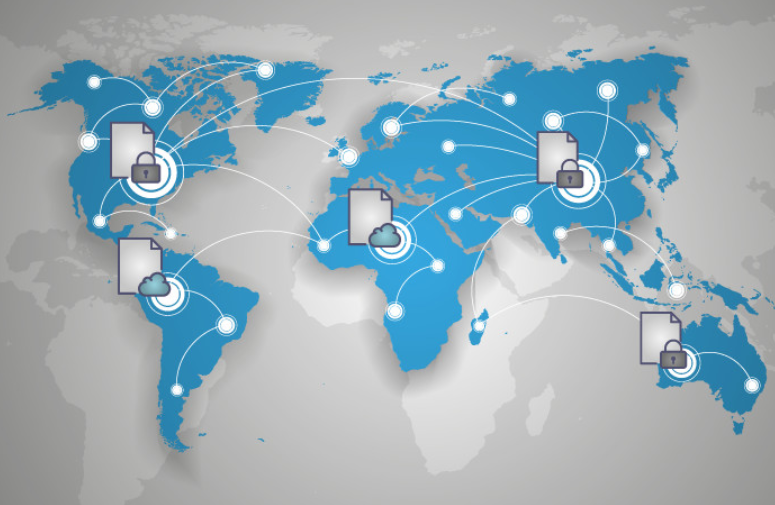
Regional data protection regulations and laws vary, and affect where you can place your servers. It’s important to be aware of these requirements to ensure compliance and to prevent penalties. For instance, in some countries, user data needs to be kept in country; placing the servers in local areas becomes a necessity. Furthermore, data transfer agreements between regions can have restrictions or contractual agreements to be fulfilled to ensure legality.
In addition to storage location, examine how local laws affect how the data is handled, stored, and processed, along with consent forms and procedures. Aside from storage location, look at how local laws affect consent forms and procedures, as well as the handling, storage and processing of data.
Choices of server placement decisions may be more complex in industries like finance or healthcare, which have more stringent requirements. Compliance or failure to comply with such regulations can be subject to harsh penalties and damage to reputation.
In addition, keep an eye out for (possible) changes in law that could affect your business. New rules and/or changes to existing rules may necessitate changes to your infrastructure. If you have operations in other countries, monitor international trade agreements or other geopolitical activity that could impact data-sharing arrangements.
It can be easier to meet standards when working with data centers that are accredited to meet standards such as ISO 27001 or SOC 2. Standards are easier to meet in a data center that has a certification to adhere to a regulatory requirement such as ISO 27001 or SOC 2. Likewise, if you choose cloud service providers that have a good record of compliance to better manage regulatory issues and also have the flexibility and scalability you need for your infrastructure needs.
Cost Analysis and Budget Considerations
When making decisions on server location, they must also take the costs of the two options into account. The first step is to do a comparison of infrastructure costs, including data center rental rates or fees for cloud hosting, which may differ from country to country.
Another consideration should be operating costs such as power, cooling and maintenance; these costs can mount up throughout the year. Also, know the taxes, tariffs or fees applicable to the areas you are considering so that you know what you’ll be spending.
Certain facilities might present fiscal awards, like tax alleviation or subsidy, to bring data centers. It is possible for these opportunities to be researched that may help cover the initial costs. Conversely, the areas with higher labor or energy costs may need to be more carefully budgeted.
Scalability is another important cost consideration to address in your cost analysis. Think about the possibility of future growth in the location and how it can be done without a significant increase in cost. When costs vary with use, cloud service providers might provide pay-as-you-go pricing, potentially making it easier to control costs. But, if you’re in high traffic areas, you may have to balance the cost of owning or leasing physical infrastructure with the ongoing expenses of cloud services.
These factors all need to be taken into account when planning, and use of traffic data to ensure that resources are allocated appropriately and not wasted through overspending.

Tools and Resources for Decision Making
It’s a task that can be very time-consuming, but if just the right tools are used, it can be a very easy way to make it a lot easier. You can get detailed metrics, e.g., server performance, user activity, geographical trends, etc. from platforms like Amazon CloudWatch or Microsoft Azure. These services offer visualizations and reporting that can assist in determining optimization areas in infrastructure. These are often used in conjunction with geographical traffic data to ensure optimal server placement and alignment to the demand.
Additionally, network monitoring software can measure the latency and connection with the network from various places and offer a clear picture of how far in distance the network affects service delivery. These resources may also be able to help you identify areas of your system that are not working well or are holding you back.
Platforms with compliance tracking can provide specific guidance to platforms on what to do with data and how to preserve it for regulatory purposes—TrustArc is providing region-specific guidance. These can help to make compliance with local regulations easier and help to keep things running smoothly.
Finally, before investing in the server locations, use the simulation software to simulate potential locations. With these simulations, you can simulate different areas of server deployment and determine what the likely results will be in the event of a real deployment. These resources can be combined to create a holistic plan that takes into account technical performance, user behavior, regulatory requirements and cost.
Case Studies and Examples
A practical approach to server placement strategies can be gained by looking at practical real-life examples. In one example, a global online marketplace was able to analyze traffic data and determine when traffic is at its highest in certain areas.
They placed their servers nearer these high-demand regions, with the result of faster load times and better user satisfaction. In another example, a gaming company with latency concerns used the regional placement of its servers to create smooth multiplayer interactions, boosting the enjoyment of its players throughout the world.
One such example is a financial service provider who prioritized compliance, housing their data center in a location with robust data residency regulations to guarantee legal and secure handling of financial transactions. In the media industry, a video streaming service deployed servers according to hot spots and optimized bandwidth and buffering times to its viewers. It can be helpful to understand the types of user behavior, regulatory requirements, and content type that can assist in making sound infrastructure decisions.

Conclusions and Final Recommendations
Several factors, which are going to meet user’s expectations and business objectives, will be considered when choosing server locations. Not only does traffic data help you determine where to install your servers and get the best performance out of them, it will also help you know where to have a closer look if you start to increase your users. There will be benefits to this from good areas of connectivity and infrastructure strength, this will help the load time and reliability, particularly in areas of high engagement and critical real-time needs.
Another key element of your plan is legal and regulatory compliance; failure to comply with local regulations will have serious repercussions. Business operations will be protected by staying up-to-date with changes in regulations and benefiting from compliant data center services while maintaining flexibility. Costs should also be analyzed and decisions made based on a financial analysis of today’s costs and the future scalability.
With advanced tools and simulation software, it can be easier to do, and you can experiment with different scenarios and alter your plans before you make any changes. This use of these technologies enables servers to be placed based on traffic, business and legal requirements. Continuous monitoring helps your infrastructure stay relevant and address new trends and challenges.
In conclusion, a carefully considered server deployment strategy can foster user satisfaction, help ensure compliance, and manage costs, all while laying the groundwork for future success. Businesses can look to their infrastructure to be resilient and responsive to the demands of the present and future with a proactive and data-driven approach.
Use our guide to selecting server locations and deploy your infrastructure where speed and reliability matter most. Choose OffshoreDedi today.