
Introduction to Redundant Routing
In a world that is becoming more connected, the capacity of servers to be continuously available is necessary in business and to the user. Redundancies routing is an important tactic to resolve the difficulties of network failure and unexpected traffic requirement. It guarantees higher mark of reliability and functioning at the networks by introducing a system whereby there are multiple avenues that data can go through.
This strategy is proactive in the reduction of the risks of single points of failure which may lead to service interruptions or downtime. In redundant routing, networks are made in such a way that they reroute data automatically in case of disruptions that are aimed at ensuring smooth running of operations. This idea is specifically applicable to industries that require continuous digital services, including e-commerce, finance, and entertainment.
Redundant routing is bound to succeed when it is able to adjust to the real-time conditions of the network. When properly set, it offers the scalability required to meet the increasing demands of data and the changing technology environment. Under this system, the organizations are able to provide reliable access to their services so that users can have optimum experience at any given time.
How Redundant Routing Works
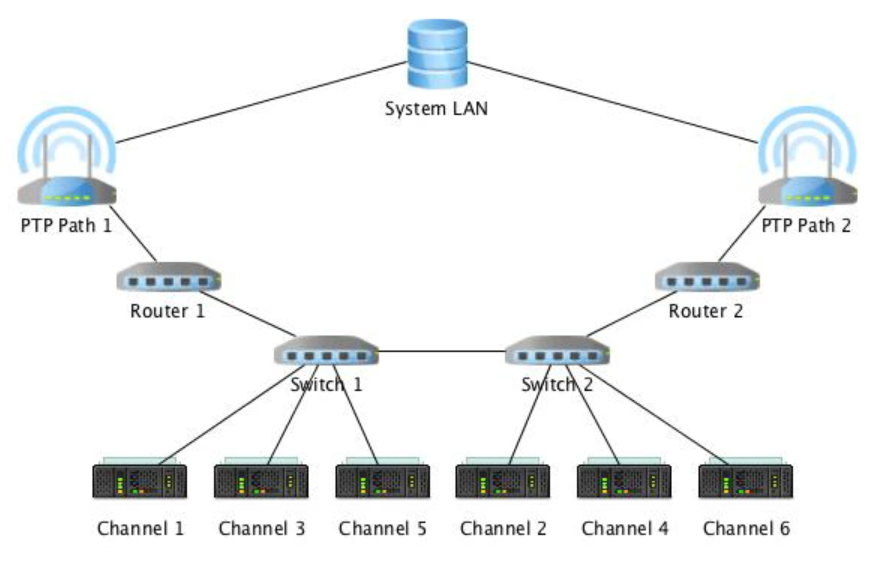
Redundant routing works by taking advantage of the many routes that allow data to flow even in the event that there are disruptions. It does this by deploying advanced protocols and technologies that are capable of dynamically choosing alternative paths to follow in case a specific route is inaccessible.
Networks tell the most efficient path options through such tools as Border Gateway Protocol (BGP) and Open Shortest Path First (OSPF) and Multiprotocol Label Switching (MPLS) advances data delivery by giving packets a particular route.
In case of a disruption, redundant routing systems react swiftly and divert data to the subsequent best available path in order to reduce delays or interruptions. This is usually enabled by the fact that real-time observation of network conditions is made and routing adjustments are made in the most efficient manner possible. These systems are based on distributed architecture whereby the route that is to be followed is distributed at various locations within the network to ensure that the network is not over reliant on one part.
Besides the increase in reliability redundant routing also improves the performance of the network through the balance of the traffic loads of the routes being available. The balancing of the loads allows each path not to get overloaded and as a result, the usual speeds are kept, and the latency is minimized by the users.
It is especially crucial in the context of the environment in which large amounts of data or dynamic loads are frequent, like streaming services or cloud applications. Redundant routing is an option that helps maintain the state of servers in the case of various circumstances since it allows data to pass through different routes.
Benefits for Server Accessibility
Redundant routing is also a great practicality in improving the reliability of accessing the servers since it allows data to pass smoothly through alternative routes in case of unexpected network problems. This will provide the servers with the ability to maintain connectivity to users even when a path has been compromised to guarantee continuity of connectivity. It is also characterized by one of its strongest benefits, the possibility to minimize latency and avoid the decline of performance when redirecting the data traffic dynamically to less loaded or more effective paths.
Besides the access maintenance, the redundant routing also offers the scalable infrastructure and servers can more easily cope with the traffic burst without the danger of being overloaded. This scaling is particularly useful when the cost is sensitive to the demand of services with variable demand like online services at major events or seasonal sales. Redundant routing spreads network traffic over several paths and hence less load per path which leads to shorter load times and more seamless user experience.

Ensuring Network Uptime
The other important advantage is that it is a part of disaster recovery. Hardware failure, cyber-attacks, or natural disasters may cause network disruption, but the redundant architecture will assist in reducing the negative impact of these disruptions and safeguarding the important data streams and maintaining necessary services online. The companies that use these systems are in a better position in protecting their businesses and indicating service promises which builds trust among their clients.
Redundant routing is also proactive, which reduces the risks of network outages, thus helping to guard the revenue streams in the organizations that rely heavily on the digital platform. This system minimizes chances of delays in production or customer satisfaction by making sure that there are alternative channels that have to be available at all times.
Lastly, redundant routing assists in meeting more and more demanding uptime requirements in financial and medical industries. Having high expectations of having the access to the service, the introduction of systems, which enhance the accessibility, will help the business to comply with the regulations and to dodge punishment, which only emphasizes the significance of the stable routing frameworks.
Challenges and Solutions
Adoption of redundant routing requires a lot of skill and care. The first difficulty is the initial design, which is to create a network architecture capable of supporting multiple paths and adding complexity without creating unnecessary complexity. Since they are poorly planned the configurations can result in inefficiencies or route conflicts which degrade the overall reliability of the system.
Also, keeping redundant routing can be easily maintained under the regular watch as network requirements and conditions may change with time. Unless monitored appropriately, old settings will not respond to a changing need and hence causes of bottlenecks or vulnerabilities.
Another important factor is cost especially to the smaller organizations. Hardware, software, and resources to set up and support redundant routing may be costly. Also, to make sure that the existing systems will be compatible with new routing protocols, one might need to invest more in upgrades or in special equipment. Certain personnel are also essential in operating such systems, which increases operational cost.

Optimizing Network Routing
Organizations can implement a number of solutions to deal with these challenges. Real-time network performance insights and the possibility to detect potential issues before they develop can be offered with the help of automated tools, including the AI-driven monitoring systems.
The optimum routing arrangement can also be maintained by periodically auditing the routing setups to maintain the relevance of the system with the prevailing business requirements. This necessitates training of IT teams in best practices in managing redundant routing so that the error rates are minimized to ensure that functionality is maintained in the long run.
Redundant routing, as well, can be reduced by partnering with managed service providers or using cloud-based solutions to some of the complexity involved. These alternatives enable the organizations to enjoy advanced routing features without investing much in physical infrastructure, or internal competencies.
Having strategic plan, implementation and maintenance is one way that businesses can manage the challenges of redundant routing and maximize on its benefits towards server accessibility and network resilience.
Case Studies
In an effort to make the networks reliable even when faced with a difficult condition, several businesses in different sectors have adopted redundant routing. As an example, when one of the most popular series were launched, a major streaming service had significant issues as many people attempted to utilize their service simultaneously. They have managed to load the traffic through multiple paths by using redundant routing and guaranteeing that access to the server would remain uninterrupted and that the server would not crash due to high demand.
On the same note, one of the international financial institutions used redundancy in the routing to enhance the dependability of its online banking. This system enabled the bank to respond to rush increments of users at any given time, e.g. during tax season or economic announcements without affecting its performance.
High-order routing protocols were implemented to make sure that in instances where there were partial disruptions in the network, critical transactions were still executed with ease to keep the customer confidence intact.
In a different case, a medical practitioner used the unnecessary routing to facilitate the increasing use of telemedicine. The organization was concerned about network resilience considering that there were high stakes in the provision of patient care, policies that involved virtual consultations. Their routing system allowed them to make smooth changes between paths so that their connectivity would be maintained in case of an emergency or outage.
These real-life examples indicate the wide range of applications of redundant routing in handling a variety of operational requirements. Those companies that have implemented these systems have reported quantifiable results in terms of reliability of the services, user satisfaction and efficiency in their operations.

Future of Redundant Routing
The future of redundancy routing can be seen in the application of new and advanced technologies that have the ability to evolve and meet the ever-increasing needs of the modern networks. The introduction of software-defined networking (SDN) that enables centralized control and increased flexibility in route choices is one of the most promising ones. SDN allows the dynamism of network configurations, by decoupling the control plane and the hardware, to run routing processes more efficiently and responsively.
Redundant routing capabilities are also going to be changed by artificial intelligence (AI) and machine learning (ML). These technologies can process large quantities of network data in real-time, finding patterns and anticipating possible problems prior to their effect on the performance.
AI can solve routing problems by optimizing the routes to ensure that delays are reduced, congestion is minimized, and the systems become more reliable through automated decision making. Predictive analytics will enable networks to be more proactive, which will make the work of the network to be smoother even in times of peak demand or other unpleasant surprises.
The other significant development is in the growth of edge computing that takes data processing in proximity to the end users. Redundant routing systems have the ability to respond more quickly and have a more localized control by distributing routing intelligence to the network edge. Such solution eliminates reliance on central servers, which makes networks less vulnerable to large-scale outages and more applicable in applications with low-latency needs, including IoT devices and VR.
Conclusion
Moreover, the fact that the use of 5G networks is growing will escalate the necessity of solid redundant routing practices. These networks have more speed and connectivity, and the routing systems need to be able to handle higher amounts of data and remain consistent in their performance. It can also be anticipated that improved efficiency and scalability will be achieved through improved protocols and new standards that are specific to 5G environments.
With future-proofing networks gaining priority in establishing new and trendy redundant routing solutions, the role of the cloud-based infrastructure and remote operation in businesses cannot be underestimated as businesses move in that direction. The improvements will make organizations to be able to accommodate the changing needs, which will make accessibility to organizations to be smooth and their performance strong in a more digitalized environment.
Keep your servers online with redundant routing that ensures constant connectivity. Deploy with OffshoreDedi today.