
Understanding Server Load
The quantity of work that your server is doing at any one point in time is known as server load. It may change depending on a lot of factors, such as the number of people who use your website or application, the complexity of the processes being performed, and the effectiveness with which the resources are used. A server with a higher amount of requests than the one assigned to it may slow down to crawling speed or maybe completely crash and cause inconveniences to the users.
One of the common causes of high load on the server is traffic, which is likely to increase during peak times of server use or special occasions. Also, there will be an unwarranted load on your server by poorly written code or unoptimized applications that require more resources. Software settings may cause inefficiencies that increase the load at the server even when they are not configured appropriately.
Knowledge of server load is not limited to being able to know when your server is struggling; it is also about knowing patterns and cause and effect. An increase in CPU load, excessive memory usage and slow response time are all symptoms that your server is in distress. Detection and monitoring tools may be used to get good insights on which processes or requests are consuming the most resources.
With the identification of certain causes of load problems, you will be able to start working on them so that your server will become reliable even during the peak.

Optimizing Resource Management
A well-performing sever is based on sound management of its resources. The first one is a fine-tuning of server settings to make sure that resources were distributed according to demand. This may include the modification of memory and CPU usage thresholds or priorities of important processes.
The other strategy is to isolate through the use of virtualization or containerization of applications and assign resources in a more efficient manner. In this manner, applications can run within their specific constraints and a single application does not take over the server capacity.
Another important part of resource management is load balancing. Choosing to distribute incoming requests to a set of servers by distributing them does not simply avoid crowding of a single server, but also offers backup should there be a server failure. Load balancers come in diverse formats, such as hardware, software, and cloud-based ones, which leaves you with many choices of the one that suits your needs the most.
The process of keeping irrelevant services and processes within control is also a part of resource management. Background processes can be disabled or removed to release useful system resources in the system. Moreover, file compression and media optimization of files, including images and videos, can be used to decrease the workload of the server through reduced processing and delivery of data.
Through these steps, a balanced allocation of server resources is possible to ensure the server does not have performance bottlenecks due to mismanagement.
Utilizing Caching Strategies
Caching is critical towards enhancing efficiency of a server since it minimizes repetitive activities. Properly done, caching may reduce the number of requests that are sent to the server by a large margin and as a result, it reduces the amount of resources that are used.
Browser Caching allows a temporary storing of some of the statical assets such as stylesheets, JavaScript files and images in the devices of the users, reducing the frequency of repeated downloading. Server-side Caching Data on the server is cache information that has already been processed and does not need to be re-processed to provide a response to a similar request.
Another useful technique is database caching which is frequently employed to save the results of queries in memory. This saves on the burden on database servers since data that is regularly requested could be accessed without running complicated queries. Object caching: This can be done by caching API responses or session data which reduces the overhead by reducing redundant backend operations.
Caching of dynamic content may also be effective where there are personal contents or high traffic applications being served. You save time and space through smart caching of user sessions or preferences of content, eliminating any processing that you do not need and still having the ability to customize. The Time-To-Live (TTL) is the cache expiration settings, which makes sure that data remains fresh and no obsolete information is sent to the users.
Performance can be further improved by use of caching layer, which can be offered by reverse proxy server or distributed caching system. Such tools detect and process requests prior to reaching your main server, and fewer resources are used to conduct normal operations.
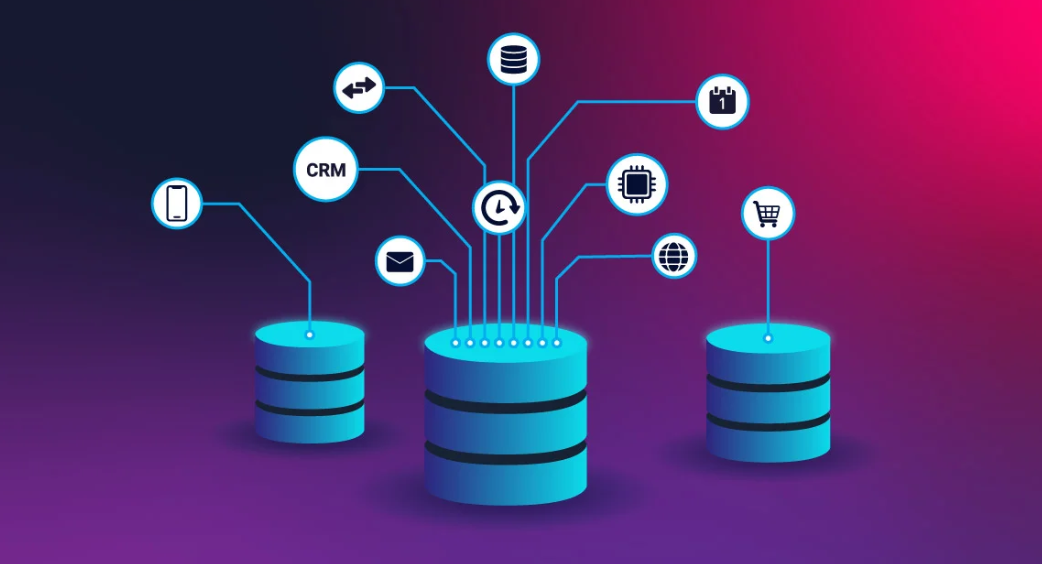
Code and Database Optimization
The use of efficient codes and well-designed databases are important in reducing the usage of server resources. Code that is clean and efficient will decrease the computationality of running operations so that your server can serve requests better. Excessive processing requirements can be avoided by removing superfluous loops, minimizing function calls, and too complicated logic.
Another way to optimize the performance would also be through the use of leveraging asynchronous programming or multithreading where possible as allowing the server to work on multiple tasks at the same time.
On the database side, columns that are commonly accessed can be indexed to provide much faster query speeds as the database will be able to access data much faster. Using less complicated joins and making sure that your database tables are normalized in the right way may also decrease query execution time and decrease the overall load on your server.
As long as your application utilises a lot of data, pagination or specifying the number of records returned with each query could assist in preventing the unnecessary resource exploitation when performing the database operations.
It is noteworthy that database schema is supposed to be checked every now and then and reformatted in cases where need be so that it can still be able to service the requirements of your application without experiencing any bottleneck. Saving older data that is not accessed too often may also be used to unfreeze storage and facilitate better queries. Slow query analysis tools e.g. database profiling utilities can prove invaluable in identifying areas that have to be optimized.
Database connection pooling should be used where feasible to deploy multiple user requests without generating an extra load. This will guarantee effective utilization of resources and minimize the latency of end users.
Implementing Content Delivery Networks (CDNs)
Content Delivery Networks (CDN) are known to enhance the performance of servers because they spread the content on more than one server and at different locations. These servers are also known as edge server and it processes requests that are nearer to the physical location of the users and this also leads to less time taken to transmit the data. This is the right solution as it reduces the latency and the burden on the main server as it transfers data delivery to the offload server.
CDNs come in particularly handy when it comes to serving static data, e.g. images, videos and stylesheets since such content can be stored on edge servers so that it can be accessed faster. Dynamic content acceleration is also often provided by CDN providers which optimize the routing of requests and responses over their networks.
CDNs can be of great help in improving the user experience of websites or applications that cater to global audiences because they guarantee that the services remain fast and responsive despite the geographical distance.
A layer of security can also be added through the application of a CDN, which could help eliminate distributed denial-of-service (DDoS) attacks. Most providers come with traffic filtering, rate-limiting among other features, which can be used to detect and block malicious requests before they reach your main server. Also, other CDNs provide services of encryption and maintenance of safe protocols, which guarantee safe data transmission.
When choosing a CDN provider, it is important to take into account the specifics of the use, i.e., the quantity of traffic, the nature of content that you provide, and the geographical distribution of your audience. The majority of providers provide the tools to study traffic patterns and make the configurations according to your needs. There are also those CDNs that are smoothly combined with other tools such as the reverse proxies or caching systems which may also streamline the server performance.
In order to achieve maximum advantages of utilizing a CDN, make sure that your contents are aptly configured to be cached. This involves the provision of right cache header like the cache-control and expiry dates in order to store and serve frequently accessed files effectively. CDN analytics can also be monitored to know the content that is in demand and this can inform further optimization.

Regular Monitoring and Maintenance
Regular checkups and upkeep of your server cannot be ignored to make sure it is running at its optimum capacity. Start with the use of monitoring tools which will show real time data on the following critical measurements like the CPU usage, the memory usage and the disk space. Such tools will give you warning of possible bottlenecks and hence fix problems before they affect performance. Another resource is logs that will provide in-depth entries of system activity and allow you to find patterns or common issues.
The maintenance activities should also entail revisiting and updating your software periodically so as to keep them up to date with the latest security and performance enhancements. Use of the old software can cause vulnerability or inefficient processes that can increase load on the servers.
The configuration files should also be checked and optimized on a regular basis since poorly set configurations can cause an inadvertent usage of resources. It is possible to maintain these settings with your server to workload to enhance stability and responsiveness.
The other important part of maintenance is cleaning up of files and applications that are not in use and/or are old. The needless data are eliminated thereby lessening congestion and creating room in the storage which directly can enhance the efficiency of the servers. Likewise, cleaning jobs like archiving of old data or deleting of duplicate data could be used to streamline the performance of queries and decrease the workload on your database.
Conclusion
You should also test the performance of your server in other conditions. Stress testing will assist you in gauging the capability of your server to deal with intense traffic whereas load testing will give you an idea of allocation of resources when there is normal traffic. Both those tests are essential to the detection of the flaws in your setup and the necessary changes.
Most of the monitoring and maintenance is automatable. Automated alerts and scripts (such as the analysis of logs, creation of various backups, or cleaning of files) can decrease the number of hands and make sure that the necessary tasks are not neglected. Backups especially are essential in protecting your information as well as giving a backup strategy in the event of some unforeseen failure.
Finally, historical data can be used to make predictions and forecast the future needs and trends. By following up on the performance of your server during a duration of time, you can be able to anticipate when the demand is bound to increase and scale it up. Combinative of proactive maintenance and proper monitoring, this would make sure that your server will be stable, secure and able to provide constant user experience.
Reduce server load without slowing down performance. Upgrade to OffshoreDedi’s optimized, high-performance server solutions today.