Introduction to Multi-Server Setups
Multi-server setups have formed part of IT infrastructure in 2026 as organizations endeavor to keep up with more and more demands of efficiency and resilience. These configurations spread workloads on a number of servers and the chances of downtime are minimized and the performance of the system is optimized. Distributing the load among multiple servers allows companies to serve significantly more traffic, achieve improved fault tolerance and place less load on any individual component.
Multi-server platform offers the benefits of scalability of the resources with the expansion of your business. You do not have to use one single machine but add or upgrade servers to meet changing demands, which may be the ability to serve additional users or provide the capacity to store additional information as well as enhance processing capability. Such flexibility has made it a favorite among businesses that need to remain relevant in a dynamic technological world.
The ability to scale is not the only strength. Multi-server environment is also improved in terms of security and data integrity when well implemented. This system will be more resistant to failures and possible attacks because operations are segmented, and major functions are distributed. As an example, the separation of database servers and application servers can be used to ensure that the security is maintained, and the total efficiency is improved at the same time.
The implementation of a multi-server solution is a very expensive task that necessitates a thorough planning and implementation strategy, but at the end of the day, it is a long-term investment that all businesses should invest in. The availability and responsiveness of systems directly can affect user satisfaction and success in operations. Although there are a number of tools and strategies required, an organization will be in a position to fully utilize the benefits of a multi-server environment in a more digital world.
Planning Your Multi-Server Setup
The development of a multi-server setup that is compatible with the needs of your organization is dependent on careful preparation. Start by clearly determining what purposes your servers will be used for, whether to host, store or to process data. This clarity will also assist you on the choices that will be undertaken when setting up the process.
Check out the infrastructure currently available so that you are aware of what needs upgrading or addition. Consider the estimated expansion of your business in order to be sure that the servers you are choosing can manage more workloads and demands in future. This can involve capacity planning or the possibility of having a specialized hardware requirement.
The server hardware must be chosen based on its performance and reliability. Take into account processors that could be used to perform high-volume tasks, a large enough memory to allow processing a large number of tasks at once, and storage solutions that will guarantee rapid and reliable access to data. In high-demand applications, SSDs can represent an improved alternative to conventional hard drives because it is so fast and efficient.
At the software level, you should put emphasis on the solutions that are compatible with your applications and provide user-friendly management interfaces and the capability to be automated. Manual work and human error can be minimized by automation tools that can streamline configuration, updates and monitoring.
Energy efficiency should not be ignored especially when you have a large number of servers. Green computers can reduce the operating expenses and also minimize the environmental impact of your data center.
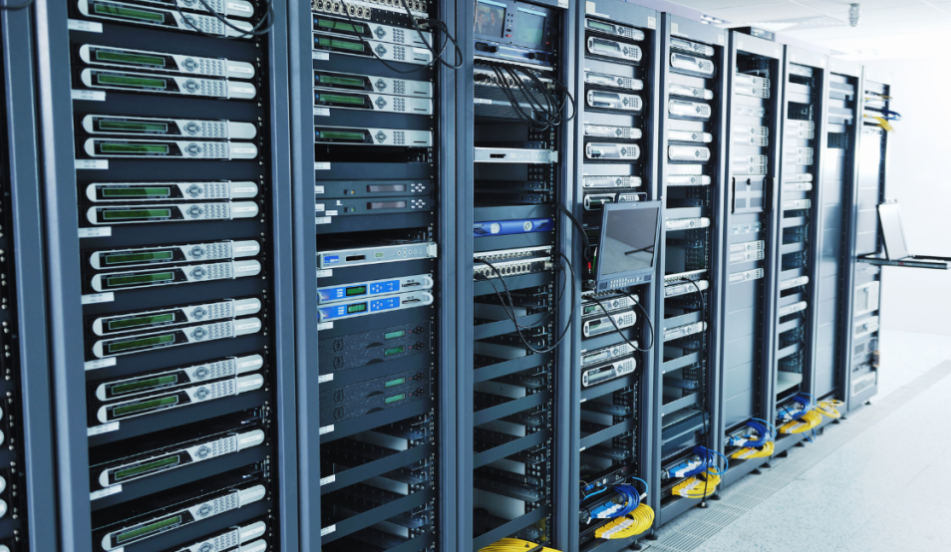
Finally, there is the physical location of your server. The adequate cooling, cable management and power distribution are necessary to ensure optimal performance and prevent disruptions that were caused by overheating or power outages. Physical organization planning will help ease the operations and maintainability in the long run.
Network Design and Configuration
To have an efficient and safe multi-server setup, a powerful network design is required. To better control traffic and increase the number of threats, it is possible to start with dividing your network into separate zones. As an example, the isolation of application traffic and database traffic reduces congestion and enables the sensitive data to be controlled better.
You should invest in high quality switches and routers that are able to support the amount of data passing through the server and hence, low latency and robust connections. Select equipment that has advanced capability such as VLAN to make logical divisions in your network to improve on performance and security.
Another important issue is proper IP addresses management. Assigning fixed IP to key systems and allocating dynamic addresses to those devices that need flexibility is a structured way of addressing this issue. This reduces the number of conflicts and simplifies the work of troubleshooting.
Network redundancy is as important as server redundancy. A number of network paths or links should be implemented to prevent failures where there is a point of failure. Such technologies as link aggregation or multipath routing can be used to make sure that the connection is not lost when one of the paths fails.
Bandwidth caution to prevent bottlenecks particularly on its performance during peak stages of use. The tools of network monitoring and prioritization could help in making sure that the important operations are not affected by the unavailability of the proper resources.
Lastly, add restriction of access to limit the network exposure to the unauthorized. Apply application role-based access and network access controls to make sensitive sections of your system secure. By merging these tactics, you will come up with a network infrastructure, which will sustain the performance of your multi-server setup and will defend it against any threats.
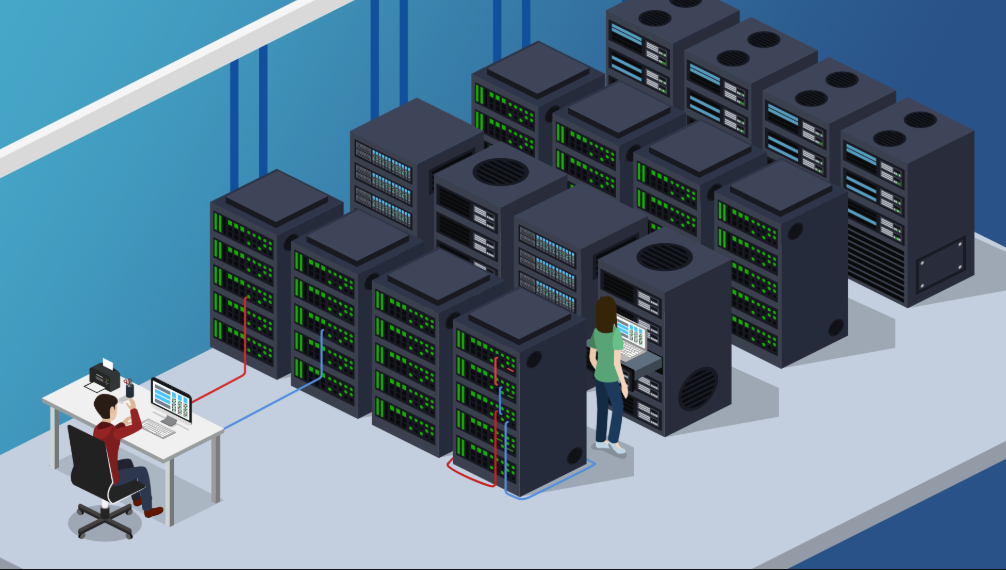
Load Balancing and Redundancy
A good multi-server environment is based on effective traffic management. Equal distribution of workloads among various servers increases performance, as well as, prolongs the life-span of the individual hardware parts as this ensures they are not overworked.
Hardware-based or software-based load balancers help in traffic trend monitoring and redirecting requests so that no server is overloaded. Advance load balancing tools also give the ability to session persistence and SSL offloading and which can also increase the efficiency of that system.
Redundancy ensures that your infrastructure is not affected by unexpected failures by offering you backup facilities that can immediately be used in place of the server that is offline. Hot, warm or cold standby settings are a good way of ensuring that there is a secondary system in place to intervene depending on how important your operations are. It should also be testing of redundant systems to ensure that they are functional and ready in a live environment.
Load balancing is usually used in conjunction with redundancy to provide support of seamless failover in high availability architectures. Clustering technologies such as enable servers to distribute workloads and resources and even offer a safety net to one failure. Replicating key information among servers in the cluster guarantees that there is no loss of data and operations are similar.
Moreover, the geographical redundancy could also be used to augment the reliability of the system in the cases of the business that serves the users in different regions. Locating servers in various places protect local occurrences of downtimes like power failure or natural disasters. This is possible by directing the traffic to the nearest active server using a content delivery network (CDNs) or global load balancers that would lower the latency and improve user experience.
Monitoring and Maintenance
To maintain the well-being of your multi-server setup, you need to be actively involved in monitoring and maintenance of the system. Install the latest monitoring tools, which are able to keep track of the key performance indicators such as the quantity of CPU utilized, quantity of memory utilized, quantity of disk I/O and network traffic.
These tools must provide custom dashboard and in-depth reporting to assist you to outline trends and the areas of inefficiency. The alerts are supposed to be set so that when anomalies occur, e.g. when resource consumption rapidly increases or there is a possible security risk, you receive an alert in time to take action before the problem grows.
Seamless operation requires that there be regular audits of the systems to assess their performance in terms of both software and hardware. Considerably check logs periodically to detect any unusual activity that may be degradation of hardware, software deficiencies, or even security attacks. Introduce automated log analysis systems to make this process quicker and involve less human control.
Maintain software components by using patches and updates with the release of each update, give preference to patches that fix known vulnerabilities or increase compatibility. Hardware such as server drives, cooling systems and power supplies should also be periodically checked in order to ensure reliability and efficiency. Observes carefully the tasks that consume resources or times of high activity since it might need a change in server settings, or load balancing policies.
In an attempt to make your setup even more stable, a thorough backup plan that includes not only full system backups but also incremental snapshots is to be implemented. Recovery procedures to ensure that they are working effectively in restoring the data and applications free of disruption.
Future-Proofing Your Setup
Thinking about what the future might hold and the changes that may take place in technology is key in designing your multi server setup. In order to anticipate these changes, it is better to focus on flexibility and scalability at the very beginning. Modular architecture is such that it allows easy addition of more servers, applications or services as needed which reduces downtime and complexity to a minimum during upgrades.
It is important to choose hardware and software that has upgrade options to ensure that your infrastructure lasts a long time. Select servers having enough expansion slots, ability to support larger capacity storage and processors capable of supporting growing workloads. On the software front, select platforms that are frequently updated and also those that embrace the new technologies, so that they align to the new developments.
Your system can also be further made more adaptable using virtualization and containerization. These technologies enable you to more effectively assign resources and implement new applications without having to be confined by physical equipment. They also ease migrations to new systems or cloud-based solutions and also ensure that you have a more agile setup.
Conclusion
Periodic evaluation of trends in the IT infrastructure and keeping up-to-date with new tools and practices will ensure that your setup is competitive. The technologies such as artificial intelligence, edge computing, and more advanced automation are bound to contribute considerably to the development of the multi-server environment. By acting in advance to assess the potential benefit of these innovations to your system, you put yourself ahead of such discontinuities.
The other important feature of future-proofing is the implementation of strong documentation practices. The precise documentation of your server settings, network structure and maintenance will be a very clear pathway to upgrading your servers and troubleshooting in the future. This can save time and reduce the number of errors in case of any change required.
Finally, ensure that your team possesses skills and knowledge to cope with the evolving technologies. Continuous training and development will help your organization transform as per the new tools and techniques, and this will guarantee your efficiency and reliability of your multi-server setup in the long term. With such aspects in mind, your infrastructure will be scalable, flexible, and prepared to fulfill the needs in the future.
Build a reliable multi-server setup in 2026 with high-performance infrastructure designed for uptime, scalability, and resilience. Choose OffshoreDedi today.