Introduction to Hardware Optimization in 2026
The issue of server hardware optimization has become more prominent than ever because in 2026 all businesses will rely more and more on digital solutions to be able to compete in the market. The essence of server hardware optimization lies in optimizing components to become very performance-intensive, energy-efficient, and reliable.
This will make the servers able to support increasing workloads and keep up with the rapid changes in technology that are defining industries in the modern world.
The fast processing of data and the continuous uptime that are necessitated by modern-day business heavily depend on the optimization of server infrastructure. Since the amount of data produced by organizations is ever increasing, the server must be in a position to handle such loads without reducing the speed or efficiency. This can be filled with hardware optimization so that one can work with large volumes of data in a quick and efficient way.
The increased attention towards sustainability is another force behind the necessity of optimization. Companies have been pressurized to be greener in terms of practices and in energy consumption optimization of server hardware is significant. The use of innovative elements and systems to ensure efficiency will enable businesses to minimize their spending and at the same time their impact on the atmosphere.
Digital operations are also currently complex, and this fact implies that businesses have to have servers that can handle various and unpredictable needs. Hardware optimization gives the flexibility to easily scale the operations so that firms are able to pursue new opportunities, face challenges directly.
It may be by having better processors, better memory options, or simpler cooling solutions but the optimization of server hardware remains such that companies will be able to keep pace with the changing environment.
Current Trends in Server Technology
Server technology landscape has been characterized by high levels of innovation with the major trends defining business management of their infrastructure. The increasing use of modular server designs is one of the most noticeable ones.
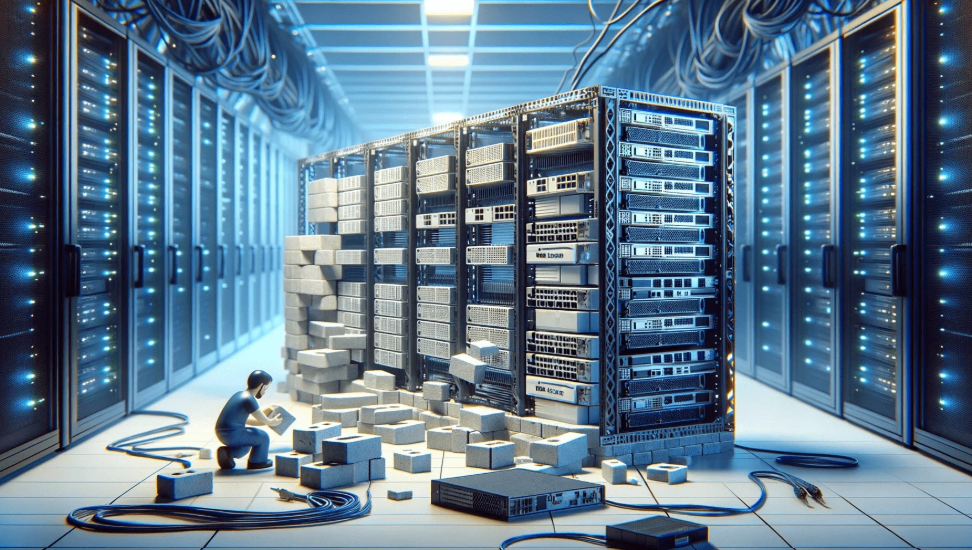
Modular system enables the business to upgrade certain parts, like processors or storage without performing a complete upgrade on the server itself. This is an effective method of reducing wastage and is also a cost-effective method of maintaining the hardware so that it is not disrupted much.
The other trend is the trend of more movement towards edge computing. Due to the increased dependence on low-latency processing of data by more industries, the need to deploy servers nearer to the production of the data has been critical. Edge servers minimize the long-series of data transfers, which leads to an increase in the processing speed and efficiency, especially when it comes to these applications as IoT and real-time analytics.
Server environments are also changing with the emergence of liquid cooling systems. In contrast to conventional air cooling, liquid cooling increases heat dissipation which enables the servers to be at optimal performance as well as consume less energy. The approach has spread through organizations that have dense data centers and controlling the amount of heat generated is a major issue.
Moreover, there is a tendency to employ more customizable firmware in servers. High-level firmware gives companies more opportunities to control the allocation of server resources, which allows them to adapt solutions to particular workloads. Such flexibility is especially useful in the situations when specific operational needs involve hardware settings that demand specific hardware.
Lastly, the increased focus on security in server technology is also not to be ignored. As the sophistication of cyberattacks increases, the manufacturers of hardware are also implementing more security measures within the server components. Encryption hardware-level and secure boot processes are now becoming a reality, which guarantees data integrity and minimize weaknesses in critical infrastructure.
Benefits of Optimized Server Hardware
Tuned server equipment gives direct benefits that directly affect business processes. The key advantage is that it is possible to handle tough workloads without interruptions. This is essential to such industries as finance, healthcare, and e-commerce where reliability and speed are not a matter of discussion. With the adoption of high-end hardware, servers will be able to handle more data without performance being affected, and the user experience will be smooth.
Energy efficiency is another benefit that can assist businesses to reduce cost of operation. Data centers can majorly reduce electricity consumption by using servers that have parts that can be used to reduce power consumption. These improvements coupled with new cooling technologies, such as liquid cooling, assist organizations to achieve sustainability targets as well as manage expenses.
Optimized hardware also has a good scalability feature. Current-day business environments are characterized by a variable demand and it is considered essential to have a infrastructure capable of serving a higher data load or alternate business requirements.
Regardless of the need to scale up to seasonal demand or enable long-term growth, optimized servers allow the flexibility to scale without significant disruptions.
Moreover, optimization of hardware does not go in vain as far as security is concerned. Hardware-level defense mechanisms, e.g. encryption, secure booting, etc., provide a very strong protection against cyber threats. This keeps vulnerabilities down protecting sensitive data and providing compliance with industry standards.
All in all, optimized server hardware is a valuable asset to companies that are dealing with the challenges of the modern digital environment due to an enhanced performance, cost-effectiveness, flexibility, and security.
Challenges in Hardware Optimization
There is a technical and logistical challenge associated with server hardware optimization. One of the major problems is the need to combine the new technologies with the current infrastructure.
The compatibility is a common issue in many organizations which use older systems that have not been developed with modern optimization strategies. This is usually accompanied with an augmentation in complexity when it comes to upgrades or replacement since businesses have to maintain smooth transitions without impacting business.
Another urging factor is the cost. The costs associated with updating the current hardware or with the application of sophisticated optimization measures are rather high. In the case of small businesses or one with a limited budget, the cost of new equipment, training, and execution may become a deterrent. Moreover, the cost may include regular maintenance and even downtime in case of transitions.
There is also a challenge of the rapid technological innovation. With the rapid development of hardware, business might struggle to keep up with the pace. The problem is that by investing in the hardware that will become obsolete within several years, the use of resources may be made inefficient and the long-term planning may be hindered.
The other challenge is that it is hard to optimize highly specific or unique workloads. Business needs are not always similar and a generalized strategy does not always work. Individualization of solutions to suit exact needs necessitates skills and profound knowledge of the hardware capacities as well as the requirements of the organization. This may be resource-consuming especially when the companies do not have IT departments.
Besides, thermal management is an issue that is still to be dealt with in dense data centers. Although new cooling processes are alleviating this, installing these processes in the existing facilities can be a difficult reorganization. These solutions may not be viable immediately to businesses that have space limitations or a limited budget.
Lastly, as the necessity to provide more security on the hardware level increases, more complicated setups and higher supervision is required. Since cyber threats are dynamic, it creates an additional challenge to the process since the optimized servers must be rigorously secured as well.
Future Outlook for Server Optimization
It is probable that the trend of the optimization of servers will be driven by the radical changes in the hardware and smart management systems. AI and machine learning are expected to have a transformative effect, and servers can be individually optimized based on performance data in real-time and adjust accordingly to improve efficiency.
This may also help to drastically eliminate manual intervention so that IT teams can concentrate in strategic initiatives and not in normal maintenance.
Efficiency in energy will continue as one of the primary concerns and advances in processing and cooling technology will reduce power usage. The efforts in research and development will probably lead to the creation of components that provide a better level of performance and require the use of less energy, so entities can achieve sustainability without reducing the operational capacity.
The developments will also contribute to the minimization of operating costs associated with energy consumption, and therefore, optimization will be less costly.
Customization will also be increasingly asked upon as the businesses seek customized solutions to meet unique workloads. The change in the more flexible hardware settings and dynamic firmware will enable businesses to tune their servers to particular applications so that they can work optimally in various operations. Consequently, the businesses will be in position to handle fluctuating demands and industry-related issues.
Moreover, edge computing will continue to grow more due to the increasing requirements of low-latency computing. Smaller, more efficient servers that can be deployed in remote or decentralized systems will enable businesses to process data in closer proximity to the origin of the data. This will provide new opportunities to industries that need to take decisions quickly and do real-time analytics.
The further improvement in security will also be on the high agenda, as the hardware manufacturers will keep on implementing strong security features at the component level. The future is predicted to be centered around proactive defensive capabilities (AI-based threat detection and more sophisticated encryption tools) that will increase resilience to new cyber threats.
Conclusion
Maximizing the server equipment has been a mandatory trend to business organizations in order to survive in a fast-changing technological environment. Through investing in new components and novel solutions, organizations will be able to improve efficiency, manage resources efficiently and be able to scale up to the constantly changing demands.
A drive towards energy efficiency and sustainability also drives the value of ensuring that server systems are optimized since businesses strive to reduce the impact on the environment without increasing costs.
The increasing complexity of workloads in industries underscores the fact that there is a need to customize server configurations that meet special operational needs. With the security issues at the hardware level gaining more and more significance, it is also important to implement sophisticated shields at the hardware scale to ensure the safety of the confidential information and the adherence to the new requirements.
Moving forward, companies that are keen on server optimization would be well placed to take advantage of the new technologies, respond to changing demands, and stand atop operational and security threats. The proactive approach can also make organizations have their infrastructure as a strategic asset that they can use to drive growth and innovation.
Take full control of your infrastructure with a powerful offshore dedicated server built for privacy, performance, and reliability, get started with OffshoreDedi today.