
Introduction to Online Anonymity
Nowadays, in the age of the Internet, when all our activity in the network can be easily observed and calculated, the significance of Internet anonymity has increased significantly. Anything we do online, whether it is visiting websites, writing a post on social media, or making an online purchase, can produce a digital footprint that may disclose our personal life and habits. This fact is one of the reasons why people are trying to hide their identity and give themselves more privacy.
Internet anonymity enables users to socialize in the virtual environment without revealing who they actually are. This may be quite attractive in a time where data privacy and data security are at an all-time low. It provides an additional protection level to all sorts of data exploitation, targeted advertising, unauthorized data collection, and third-party surveillance. To many, the power to stay undetected in the course of surfing the web is not only a preference, but a primary means of ensuring security of a person.
Besides safeguarding personal information, anonymity on Internet may allow humans to feel freer in expressing themselves. When it is not necessary to fear landing in trouble due to personal identification, one is likely to express an opinion, ask a question, engage in a debate without hesitation about critical issues. This can especially be useful in cases were expressing oneself out loud may lead to counteraction and discrimination. It enables the open and honest interaction of people, enhancing sharing and a more responsive and varied conversation online.
However, the pursuit of anonymity on the internet is not a simple or straightforward affair. We have navigated the curve of safeguarding our privacy, but we must circumvent the tools and technology designed to track and identify users.
Cookies, IP monitoring, and many other systems are present, which have the ability to erode our actual attempts to remain anonymous. Therefore, to become conversant with the peculiarities of the process of achieving and maintaining anonymity in the online sphere, it should be among the first priorities of any human, who wants to preserve his or her online identity.
On the whole, anonymity on the Internet may be considered a necessity for preserving personal privacy and enabling freedom of speech in the era of the Internet. It acts as a form of security against the omniscient surveillance and information hoarding that define our internet use in the current day.

Benefits of Being Anonymous Online
The possibility to not reveal personal information online by staying anonymous is one of the key benefits of such a practice. The need to hide who you are may serve as the defense against unauthorized access and improper use of your personal data in a world where related personal information can be easily gathered. This is especially important when it comes to prevention of identity theft and other cyber criminals that take advantage of personal information.
Freedom to communicate and co-create could also be boosted under the anonymity without the liabilities imposed by the society and prejudices. It is usually easier to speak out our minds and have an open discussion in anonymity. This may result in more enriching and more truthful exchanges of thought, which create the atmosphere in which a different opinion is more likely to be heard and taken into account.
On top of that, online anonymity gives whistleblowers and activists the opportunity to deliver fundamental information without jeopardizing their security. There are numerous circumstances in which whistleblowers reveal malpractices or change agents demand it at the risk of punishment. The anonymity provides a cover for them, allowing them to expose significant things without jeopardizing their safety.
Anonymity may be beneficial to anyone engaging in online communities, as it fosters a more equal sphere. In the absence of personal identifiers, discussions are less likely to be preconceived due to biases related to race, gender, age, or social background. This has the potential to lead to more meritocratic interactions, where ideas can be discussed on a merit-based basis, rather than on the basis of the individual’s identity.
The anonymity also enables one to find a support and solicit advice on issues that are sensitive without fear of stigma. People are able to seek and provide support to each other in online space without identification by sharing their troubles whether in terms of health, personal issues or any other personal matters. This may prove invaluable to persons that need assistance but are not willing to be identified as in need of the same publicly because of the issue of privacy and judgment.
Challenges and Risks of Online Anonymity
Cyberbullying and harassment are one of the forms of online anonymity that has proved to be very demanding. This anonymity blanket may give people a sense of confidence to act out against others because they are convinced that they would not be punished.
The facelessness may birth an atmosphere of poisonous character because of which the psychological state of those being victimized is impacted adversely.
The other risk involves the possibility of outlaw practice. Due to the anonymity, people can commit crimes like engaging in hacking, illegal trading or dissemination of untrue information with protection. Being fed with the fact they may not be tracked so easily, people may be tempted to engage in illegal practices that tend to undermine the integrity of the Web and online communities. Such absence of responsibility poses a big challenge to the police and computer security law enforcement.
The proliferation of misinformation also exacerbates the problem of accountability. It becomes more challenging to hold people accountable when they post fake information without providing identification. This can cause significant confusion and a lack of trust among internet users, ultimately undermining the credibility of online information sources.
It can also be an obstacle when it comes to trust in online societies due to anonymity. Without being able to be sure of one another, it is sometimes difficult to create an authentic relationship and develop community. This sentiment of mistrust may inhibit teamwork and compromise the quality of the online interactions in general.
Furthermore, the anonymity status online may complicate the validity of the community guidelines and make them hard to be implemented by moderators and administrators of a given platform effectively. It is difficult to track the behavior and put into effect certain punishment without definite identifiers. This may equate to inconsistencies when it comes to ensuring rules are equally met, which can create a dangerously or unfriendly cases to users.
Even though the protection of data and surveillance abuse, which can be provided by anonymity, can contribute to the objectives described, it can also result in them. Finding the correct combination of the benefits of anonymity and the need of accountability and safety is a complex issue that requires time to be reflected upon and concerns the activities of every single stakeholder.
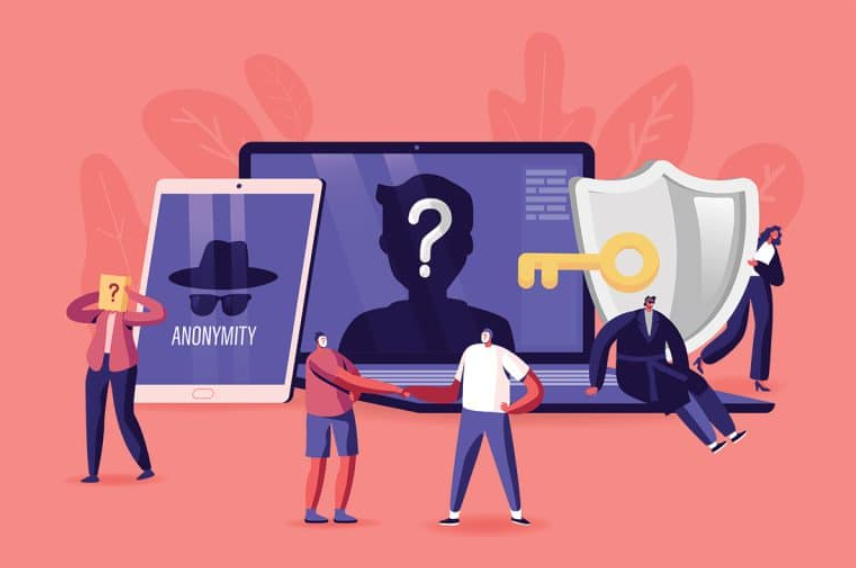
Balancing Anonymity and Security
The need to achieve anonymity and also lead a secure life online is quite a delicate job. There are a number of measures that users can follow to ensure that their anonymity is retained at the same time reducing security risks. A feasible solution is to employ cryptographic messaging applications that allow keeping the conversations confidential and encrypted. These messaging applications scramble text and it becomes hard to decipher them by the third persons and read them.
Virtual Private Networks (VPNs) is another important instrument. VPNs hide your IP address and encrypt your Internet connection, serving as an additional security layer and protection against anonymity. VPNs act as a secure server that channels all your online actions thus masking your personal data to eavesdroppers and malicious hackers.
Anonymity online is also achieved with the help of privacy-based browsers. These browsers are such that they reduce the possibility of data tracking and restrict the usage of 3rd party cookies that may be used to track your online habits. Other functions such as ad blockers and script blockers also increase your privacy by blocking collection of data without authorization.
It is important to have a keen eye on what you post on the internet. Periodic and continual checking and rechecking of privacy settings on the social media site as well as other online services would not encourage exposures of personal information as a result of negligence or oversights. Your identity can be further protected by making sure that you do not assume real names, addresses and other identifying information in your online accounts and messages.
Additionally, it is essential to be aware of the risks and legal issues associated with certain online activities. The issue of privacy is valid, but it should not be misconstrued as an acceptance of illegal acts. Recognizing the ethical limits and legal accountabilities connected with internet anonymity can help individuals use the internet environment responsibly.
It should also be noted that a balance between anonymity and security can sometimes be achieved with the help of a set of technological instruments and knowledge-based practices. By staying up-to-date and being cautious, people can minimize the advantages of being anonymous on the internet.

The Future of Anonymity Online
Online anonymity is about to change significantly. Our current anonymity will be redesigned by increasing technological improvements, including artificial intelligence and advanced data analysis. On the one hand, better encryptions and anonymity-reducing tools will enable us to remain unidentified. Conversely, technologies in the fields of tracking and surveillance may advance to the point where it is exceptionally hard to remain untracked.
The legal environment will also be an important factor influencing online anonymity. New policies that balance an individual’s privacy rights with the need for accountability can be implemented by governments and regulators. Such regulations may affect the level of anonymity that can be attained and the means by which the populace can achieve it.
Moreover, the social context of privacy and anonymity is evolving. Evidence is mounting that as people and organizations become increasingly aware of the issue of data privacy, a growing movement is emerging to demand more protection. This may lead to the wider acceptance and adoption of privacy-enhancing technologies, as well as support for the legal framework that safeguards anonymity.
New technologies, such as decentralized networks and blockchain, may provide new opportunities to achieve its goal of anonymity. Such systems operate without a central control point, which increases the difficulty in tracking users by a single agent. However, there are some challenges and risks that must be carefully analyzed with them.
Going forward, it will be interesting to see how the combination of technology, regulatory tools, and societal values can be leveraged to achieve the future of online anonymity. Being aware and flexible will be a key to success for those individuals who want to stay on their side when it comes to protecting their privacy in the dynamic digital world.