Introduction to Undersea Cables
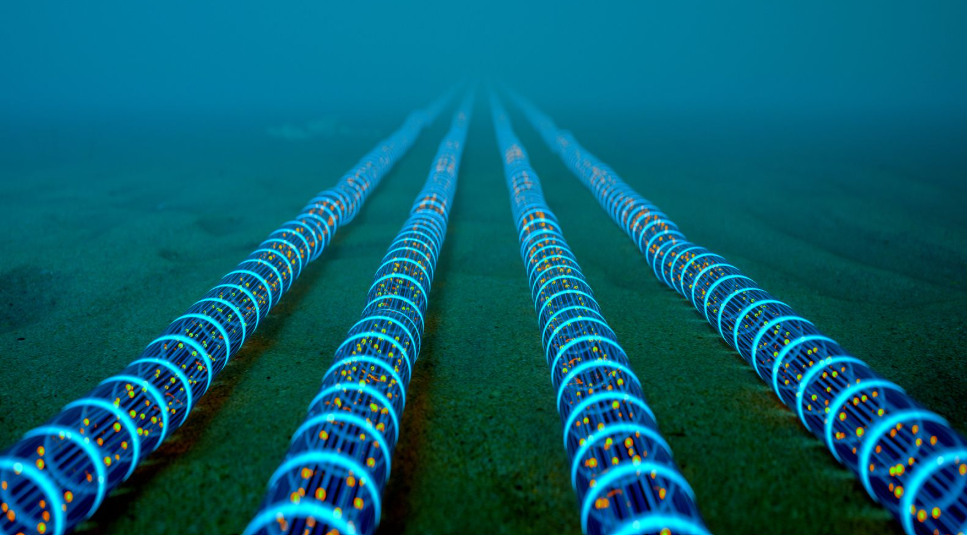
Every time you load a webpage or send a message, your data is likely traveling across an intricate network of cables lying beneath the ocean. These undersea cables, stretching thousands of miles across the ocean floor, form the foundation of the global internet. Without them, the interconnected world as we know it would not exist.
Undersea cables are an amazing concept whose size and complexity are impressive. Such cables are constructed in order to provide very large capacity of data transfer with very high speed, thus providing software to allow real-time communication across continents. They connect nations and continents and businesses, governments, and individuals are in a position to exchange information easily regardless of the distance.
The idea of laying cables across the ocean began in the mid-19th century with telegraph wires, but today’s cables are far more advanced. Modern undersea cables rely on fiber-optic technology, using light to transmit data.
Encased in multiple layers for durability and protection against oceanic conditions, they are engineered to withstand immense pressure and potential hazards on the seafloor. With more than 99% of international data traffic relying on these cables, they are among the most essential pieces of infrastructure in the digital age.
Interestingly, the cables do not simply unite the continents, but they also define the way in which the data circulates across the globe. The location of these cables affects the speed with which the information can transfer between different locations and this will influence availability and quality of the internet services. The amount of data that these networks have to sustain is enormous, which serves social media interactions as well as video calls and even money transfers.
However, these cables are not objects that lie in the water, buried and forgotten. They are being continuously upgraded and expanded to meet the ever-growing demand of connectivity in the world and transform the internet into fast, efficient, and affordable. The digital world is informed by large infrastructure that can be comprehended by this knowledge of the purpose of these cables.
How Undersea Cables Function
The use of fiber-optic technology in submarine cables is important to transmit information across continent borders. These cables are fundamentally composed of extremely thin glass fiber that is meant to transmit information in the light format. This process starts with the transformation of the digital data e.g. an email or video file into the light pulses.
These are pulses traveling through the fibers at very high rates, which cover thousands of miles along the ocean floor. Upon reaching the endpoint, the light signals are converted back into digital data, making them accessible to users.
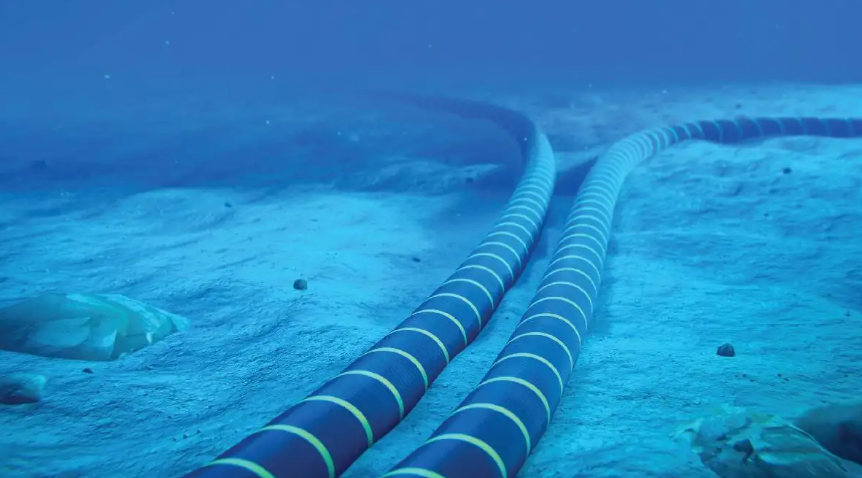
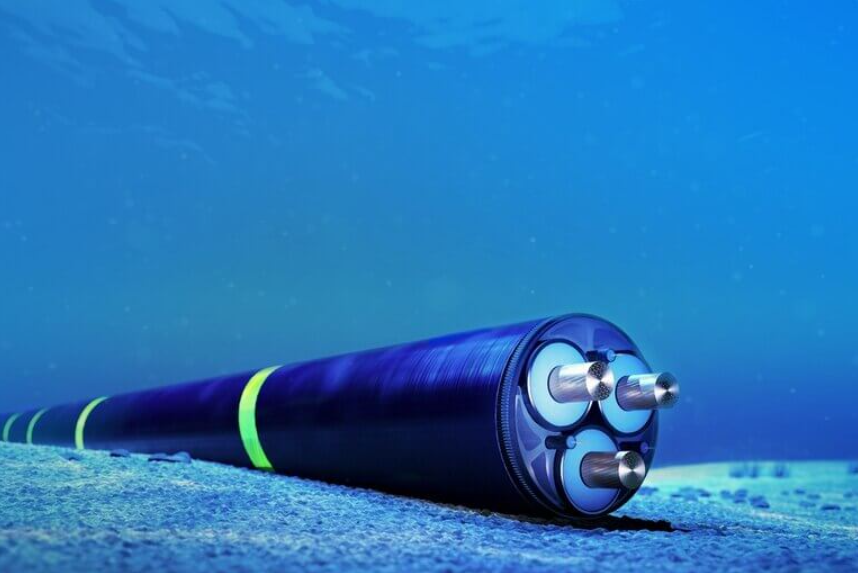
In case of a crash, the fiber cables are covered with several layers of other materials e.g. steel, copper and plastic, that will protect the cables against physical and other harsh conditions in the sea. Despite being robustly constructed, cables are relatively lightweight and flexible, allowing them to be installed efficiently along the seabed.
Data transmission through undersea cables is highly efficient, with each cable capable of carrying terabits of information every second. This capacity allows for simultaneous global interactions, from streaming services to secure financial transactions. Specialized repeaters, installed at intervals along the cable’s length, amplify the light signals to maintain their strength over long distances. Without these repeaters, the signals would weaken and fail to complete their journey across oceans.
The placement of undersea cables follows specific routes, often selected to minimize potential risks like underwater obstacles and high seismic activity areas. These routes are carefully mapped and surveyed to ensure the cables can be safely deployed. Submarine cable-laying vessels carry out the installation process, precisely positioning the cables on the seafloor using advanced technology.
These cables are not physically visible, but their presence is the key to the smooth operation of the global connectivity. They form the basis of the current internet that enables the transportation of data to move efficiently and in a constant manner over long distances of the world.
Impact on Internet Accessibility
The accessibility and performance of internet services in different parts of the world are directly tied to the infrastructure provided by undersea cables. These cables act as the main routes for data transfer, and their locations often dictate the level of connectivity available in various regions. Areas with extensive networks of undersea cables typically experience better internet quality, as the data has multiple paths to travel, reducing congestion and improving reliability.
Conversely, regions with fewer cables are at a disadvantage, as they rely on limited infrastructure to handle their connectivity needs. This often leads to slower data transfer rates and less stable internet services.
Remote areas, such as certain islands or landlocked regions, may face particular challenges since they depend heavily on a small number of connections. In cases where a cable becomes damaged or disrupted, these regions may experience significant delays or even a temporary loss of internet access.
Moreover, the positioning of cables may also affect expenditures on internet providers hence prices to consumers. Even in the well-connected areas, provider competition can be used to sustain lower prices and fast speed connections. Nevertheless, there may be additional barriers to access since infrastructure is deficient in some rural regions and cable access is unavailable (or expensive) and offers few alternative services.
Sea cables are also involved in linking developing countries to the rest of the world. While some countries benefit from newer, high-capacity cables, others remain dependent on aging infrastructure, unable to meet the growing demand for bandwidth.
This has created an observable disparity in quality and access to internet in various regions of the world due to this uneven distribution of resources.
Internet usage in the world is ever increasing and dependency on these cables is further intensified. Video streaming, virtual collaboration, and e-commerce are all high-traffic activities, and therefore, demand high-quality and efficient connectivity, which also highlights the relevance of a well-spread and managed network of undersea cables.
Challenges Faced by Undersea Cables
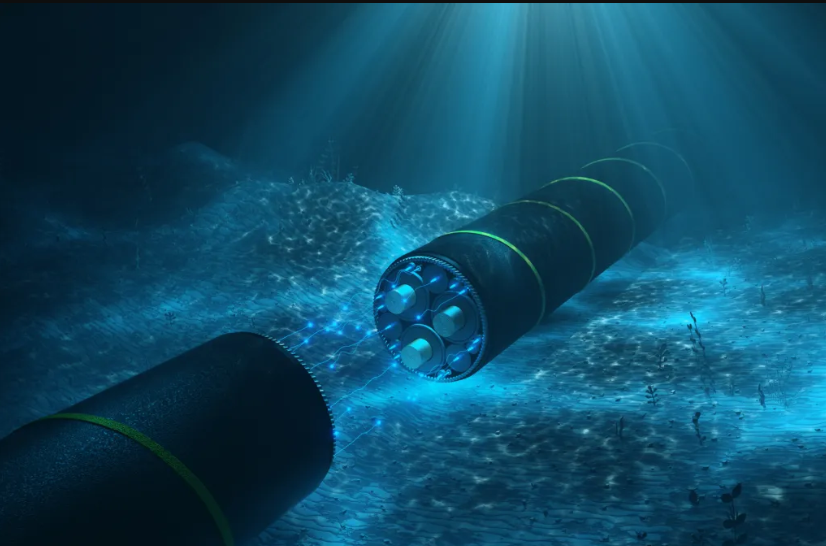
Undersea cables encounter a variety of risks that can disrupt their operation. One significant challenge arises from accidental damage caused by human activities. Fishing operations, particularly trawling, and ships dropping anchors in cable zones have been known to sever or damage cables inadvertently. These accidents may disrupt the flow of data resulting in massive connectivity problems in the areas requiring the cables in service.
The other threat is that of the natural environment. Cables may be subjected to excessive pressure due to underwater landslides, high ocean currents and tectonic plate movements resulting in fractures or displacement.
Even though cables are designed to endure harsh conditions, these environmental factors remain unpredictable and can pose significant threats. Additionally, while rare, some marine creatures have been observed interacting with cables, which, in a few cases, has led to minor damage.
After a damage has been suffered, it is a complicated process that cannot be achieved with ordinary equipment because it is necessary to find out where exactly the fault lies. The process of repair is usually done by extracting the broken part of the cable at the ocean floor, a process that is usually difficult in the deeper ocean.
The process is time-consuming and depends heavily on favorable weather conditions, which can delay repairs further. High-traffic regions or areas reliant on a small number of cables may feel the impact of such delays acutely, experiencing reduced speeds or disruptions in service.
Security is also one of the factors that add to the problems the undersea cables are subjected to. They are the key components of infrastructure and thus they could be vulnerable to sabotage or mishandling thus leading to the breach of data or a significant connectivity issue. It is also a constant problem to monitor and protect these cables as they are very long and far away.
Lastly, with the ever-growing need of the internet worldwide, these cables must also be capable of supporting further and further loads of data, which also creates a new level of complexity, leading to the incomplete stop of investment in upgrades and monitoring technology.
Future of Undersea Cables
The future of the international connectivity is being marked by the development of the undersea cable technology as the current obstacles are being overcome and the increasing data demand is being met.
The engineers are working on the development of cables using better materials which will be able to endure environmental forces and unintentional damages, and therefore demonstrate better reliable performances in the long run. Not only do these improvements minimize the chances of outages but they also minimize long-term expenses on the cost of repair and maintenance.
Besides durability, big gains are being achieved in increasing the carrying capacity of cables in terms of their data carrying capacity. With further incorporation of more effective fiber-optic technology and optimization of signal processing technique, newer cables can transmit higher quantities of data at a higher rate.
This will be crucial to the constantly growing use of the internet in its application of executing chores like high-definition streaming, telecommuting, and latest trends of virtual reality and artificial intelligence.
The international efforts are also being carried out to replace old cables in areas with weak internet infrastructure. Such initiatives will improve connectivity in the underserved areas and this will allow access to economic development, education, and communication. With it being a bridge in accessibility, this new infrastructure can create a more equal online environment.
The undersea cable network is developed in a close collaboration between the governments, the private companies, and international organizations. The sustainability and the effectiveness of these investments are highly dependent on research, infrastructures development and laws.
Moreover, with the increasing need in internet services, monitoring and maintenance inventions are becoming a must in order to bring about reliability in the long run.
Undersea cables shall continue to be one of the pillars of the digital age in the future. The future of the internet as the world becomes more reliant on connectivity will be determined by their development and thus, will be essential to the future of communication in the world.