Introduction to Satellite Internet
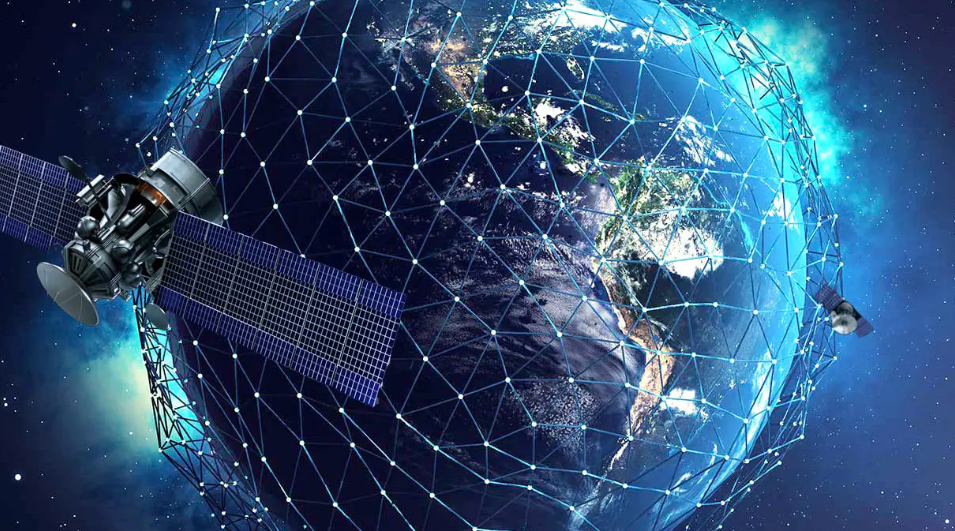
Satellite internet is slowly becoming a revolutionary system to the conventional systems in the changing environment of the internet technology. Satellite internet is a type of internet that uses satellites revolving around the earth to provide connectivity compared to the traditional services that rely on underground cables or cell towers to provide connectivity. In this way, it is possible to cover those locations where traditional infrastructure is either unworkable or absent, closing the digital divide among millions of people.
The potential of digital access is transforming the opportunities of remote and underserved areas due to satellite internet and its capabilities to provide high-speed connection. As the satellite technology improves, users are able to enjoy faster internet speeds with more reliable connections even in the areas that are formerly off-limits to the strong internet services. Such capabilities are paving way to more personal as well as business applications such as ways and locations of data storage and access.
Since satellites transmit signals straight to the ground receivers, this technology eliminates the possibility of having to be dependent on physical cables, which can be easily damaged or suffer shortcomings in coverage. This disruptive connectivity technology is creating a path to greater flexibility in the use of the internet and the control of data storage solutions towards decentralization.
Impact on Data Storage Locations
With the increase in internet connectivity in the world through the satellite internet, new possibilities exist in the way data storage facilities can be reexamined. High-speed internet is capable of being provided even to the remotest locations; hence the data centers are not limited to the urban centers that have a lot of infrastructure. Rather, they can be constructed in more geographically distributed locations, with their peculiar benefits in terms of price and scalability.
Data storage can be located in less populated or rural locations that will considerably lower land, construction and energy costs. The savings are especially attractive to companies that want to control the cost of running the business without losing access to the high-speed and quality internet. Also, by decentralizing data centers, it will be possible to reduce the pressure on the current infrastructure in cities by equally allocating resources.
Satellite internet also enables data storage solutions to be brought nearer to the end users in remote areas and this enhances accessibility to the population that used to be traditionally disadvantaged in terms of connectivity.
This makes it more inclusive when it comes to data management so there is no need to rely on very congested metropolitan data hubs. Furthermore, decentralization is resilient to local disruption because business processes are not restricted in any location but are distributed to other places.
The accessibility of satellite technology all over the world encourages more freedom in data warehousing locations between businesses and individuals. Such changes promote the creation of new models of storage that are more efficient and flexible and focused on the requirements of the more interconnected world.
Advantages of Satellite Internet for Data Storage
The satellite internet presents a set of benefits to data storage especially to areas that have traditionally had inadequate infrastructure. The flexibility is one of the main advantages as it allows setting up data storage facilities.
In contrast to the previous system where the network relied on cable systems or urbanization, satellite internet enables companies to take into account a broader range of geographic positions. A high degree of flexibility may result in high savings in cost since land, buildings and energy in the rural or remote location are usually cheaper.
The other notable benefit is the increased coverage of underserved areas. Satellite technology provides the possibility of location of data storage facilities nearer to users in remote areas by facilitating the provision of high-speed internet connections in remote areas. This locality is useful in minimizing the latency of the local users and increasing the performance of the regions where conventional connections have been constrained.
In addition, satellite internet inculcates strength in data storage policies. By spreading facilities out to several far-between spots and not concentrating the facilities in high concentration urban centers, risks to localized disruptions, including power outages or natural catastrophes can be reduced. The idea will increase the continuity of operations and protect the access to vital information.
Lastly, the lesser reliance on physical infrastructure decreases maintenance expenses and provides an option to the areas where it would not be feasible to install traditional networks. This gives a lot of room to innovate and be efficient in data management, particularly with increased demand of connectivity around the world.

Challenges of Using Satellite Internet for Data
Even as satellite internet promises the transformational nature, it is associated with its own challenges especially when it is used in data storage. Among the issues, there is the inconsistency of satellite performance under the specific circumstances.
The stability and speed of satellite connections may be affected by factors like weather interference like heavy rain or snow. These delays may cause unpredictable accessibility to information or efficiency to essential processes.
The other challenge is the low bandwidth that comes with the satellite connections. Bandwidth limitations may cause slow speeds during uploading of data or downloading of data which is not ideal in situations when there is a need to transfer a large amount of information as well as in the case of an organization that handles a large amount of information. This may be disruptive to workflows, which require high-capacity data processing or real time analytics.
There are also technical vulnerabilities, which are unique to the use of satellite systems. Satellite signals have to traverse a long distance generating a latency that can limit performance, particularly when using an application that demands instant communication or fast access to data.
Although such delays are minimized by the development of satellite technology, they continue to be a prominent weakness when contrasted with fiber-optic networks on land.
The issue of cost is also a problem especially to businesses or individuals in areas where they need to install satellite internet at high initial costs due to the use of specialized equipment. Satellite systems on the ground or in orbit are also maintained and upgraded adding to the current cost of utilizing this technology in data storage.
Finally, there is the issue of cybersecurity threat. Data exchange between satellites and ground-based infrastructure provides numerous areas of possible vulnerability. Secrecy of such systems against unauthorized access or interception is a highly sensitive undertaking that may prove to be difficult and expensive to execute properly. As the popularity of satellite technology grows, data security and protection against cybercrime will be in a continuous process of innovation and surveillance.
Future Trends in Satellite Internet and Data Storage
With the advancement of satellite technology, new tendencies are forming the manner of storing and retrieving data. One of the new things that have come by is the combination of satellite internet and edge computing. This is due to the fact that it allows data storage and data processing to be closer to the source of data generation which reduces latency and improves real-time decisions making.
It may be particularly useful in such fields as agriculture, energy and even disaster management where it is important to have access to the information in a given period of time.
The other trend is on miniaturization and mass production of satellites that are making them cheaper and more accessible. These cheaper and smaller satellites make it possible to build bigger constellations which can cover a larger area and provide redundancy.
Not only does this infrastructure enhance the internet connectivity but also creates more opportunities to businesses to store and manage data in areas that have been hitherto not accessible.
The development of energy efficient satellite models and renewable energy incorporation also prevails in the future of data storage. As the issue of sustainability becomes increasingly important, it is being combined with other renewable energy sources like solar and satellite-powered systems to form a more sustainable approach to connectivity and storage. This is especially significant when a particular industry tries to comply with environmental regulations and develop more digital facilities.
Machine learning and artificial intelligence have become important in streamlining operations and management of satellite internet. Data traffic patterns, demand prediction and resource allocation are analyzed using AI-driven systems in a more efficient manner. This technology will guarantee better utilization of bandwidth as well as alleviate some of the existing constraints of the satellite internet.
Finally, with the increase in the number of low Earth orbit (LEO) satellite networks, it is likely that they will facilitate the provision of a more seamless connectivity and support generally advanced technologies such as the Internet of Things (IoT).
Satellite internet will become the center of gravity in defining the data storage sphere over the next few decades with the help of these innovations, allowing novel applications and applications in various sectors.
Conclusion
The management of data will take a different dimension because the satellite internet is able to provide solutions that are more flexible and involving. It is also helping to bring a transition to a decentralized form of data storage with the capability to deliver connectivity to remote locations, allowing the facility to be situated in areas that could not have been previously considered reachable.
Not only does this decentralization save the expenses involved in the urban infrastructure, but also makes it more resilient through spreading resources to various locations.
With the integration of world connectivity and new technologies such as edge computing and renewable energy, the satellite internet is leading to a more viable and effective system of data storage. This development favors industries that are dependent on real-time access to information, which assist them to work more efficiently and at the same time as environmental issues are being presented.
Despite the challenges like weather-related disruption and latency, as more effort is made to innovate on the satellite technology, these challenges are gradually being overcome. As low Earth orbit satellite networks grow and AI-driven systems become more integrated, the connectivity is becoming quicker and more dependable to meet the requirements of data management in any of a variety of sectors.
The possibility of satellite internet promoted by the need to bridge the gap between the city and the rural regions is opening up opportunities of more balanced access to digital resources, which are pushing forward regions where infrastructure development has fallen behind.
Its role in the manner and location of data storage will mark the beginning of a future in which storage solutions are more flexible, as well as customizable to the needs of an increasingly-interconnected world.
With the maturity of the technology, there are opportunities that businesses and individuals can reevaluate their data storage model and adopt models that are not only efficient and cost-effective but also inclusive.
Although more needs to be done to overcome current shortcomings, the fast development pace of satellite technologies is establishing a future in which connectivity and data management can be accessed on a genuinely global level.
If you want to understand how OffshoreDedi can power your websites with privacy and reliability, head over to our homepage to learn more.