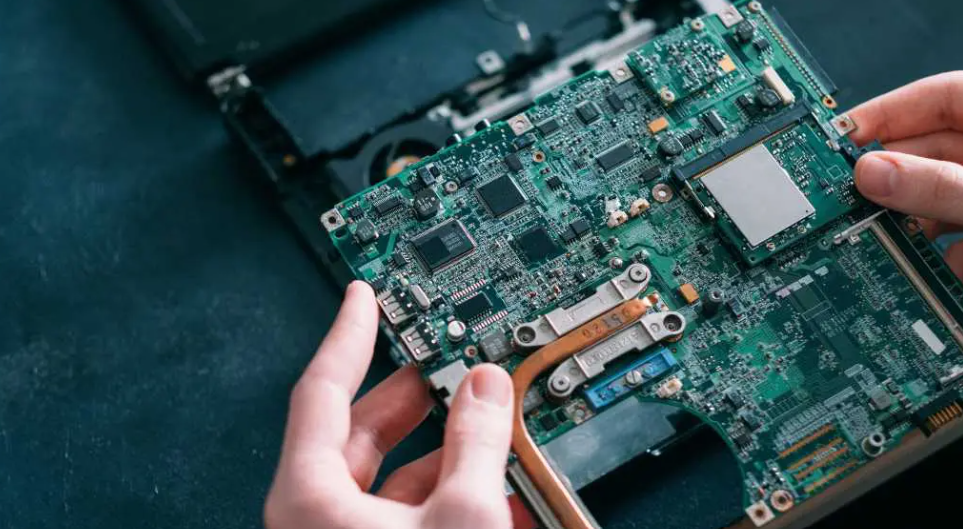
Introduction to Storage Controllers and CPUs
Storage controllers and CPUs have entirely different purposes in computing systems but they are both essential. Central Processing Unit or CPU is meant to carry out computational functions and it processes instructions at unbelievable speeds.
They are in charge of the coordination of the whole system where the tasks are performed efficiently. Storage controllers, in their turn, are focused on the ways of controlling the traffic of information between the system and storage devices, such as hard drives or SSDs.
They make certain that data is stored and accessed in a reliable and orderly way, and can in many cases be critical in optimizing the performance of the storage hardware.
The difference between these two elements is the type of workloads they have. The processors are designed with a single purpose that is to compute by using a complex architecture that is optimized towards processing.
Storage controllers, as such, are expected to deal with a broad range of functions at the same time, as the management of data transfers, redundancy with the help of RAID setups, and error corrective measures. Such a multiplicity of functions puts special pressure on storage controllers and results in the possibility of over strains and possible failures in some conditions.
The differences of these components are also brought out by their operational environment. Whereas the CPUs are usually engineered to work under controlled environments, storage controllers are usually exposed to more unpredictable external environment because they are closer to the storage devices. Also, the storage controllers are prone to more stress during intensive data operations that may maximize wear and tear.
The differences between them help realize why the two crucial components need different treatment when it comes to their maintenance and utilization to guarantee good performance of the system.
Complexity of Storage Controllers
Storage controllers have a large variety of tasks to handle thus making their operation more complicated. They manage such processes as data caching, the RAID setup, and error detection, and all these processes need to be carefully coordinated.
Such multitasking character exerts greater load on these components than CPUs which are largely used in executing instructions. Storage controller architecture should be able to perform trade-off between performance and reliability because any inefficientness or failure can directly affect the data integrity.
Also, the storage controllers must be able to communicate with various kinds of storage devices, including HDDs, SSDs and hybrid configurations. Devices of different types have a set of protocols and performance features, which should be easily integrated within the controller.
Their design and operation is also complicated by this compatibility requirement. As an example, the unification of various storage technologies will tend to reconcile the different speediness and meet peculiarities of data processing.
The fact that the functionality of it depends on the firmware is another issue of complexity. Storage controllers are required to work in a certain software environment and any glitches or inconsistency of the firmware may result in errors during the operation.
Besides, with the increasing complexity of data storage systems, the controllers have no choice but to increase their capacity and transfer rate, which stretches the boundaries of their potential. This constant evolution demands constant improvements in design and therefore storage controllers are a very important but sensitive element in the contemporary computing systems.
Environmental Factors Affecting Storage Controllers
Storage controllers are very vulnerable to environmental parameters that may jeopardize their operation. The shift of temperatures is also a major issue as the high heat conditions can corrode the components and the extreme cold can impair performance.
Moreover, the dust and debris may clog airflow leading to overheating and eventual damage to the system. Other considerations such as vibration and physical motion also play a significant role particularly in industrial environments where mechanical instability may be caused by vibration caused by machinery. These vibrations can cause connection looseness or can break internal parts which may cause operational errors.
Voltage spikes or drops are also sources of power inconsistencies which contribute to increased risk of failure. Storage controllers are utilized based on reliable power supplies in their operation, and any interruption may destroy the circuit or spoil the data. Places where the electrical infrastructure is not reliable or where power spikes often occur can have increased failure rates in these parts.
In addition, storage controllers can be affected by the closeness to the sources of electromagnetic interference (EMI) in their normal functioning. Such devices as motors, transformers or other high frequency devices also generate electromagnetic fields, which can disrupt the sensitive electronics of the controller. Such upheavals may result in erroneous data, temporary disruptions or even irreversible harm.
Storage controllers are also difficult to install in places where humidity or moisture can be experienced. After a long period of such conditions, metal parts may be corroded, which undermines their mechanical properties and electrical conductivity. The reliance of the storage controllers heavily depends on the way the operating environment is considered.
Manufacturing and Design Differences
The quality of designing and manufacturing storage controllers has a significant impact on the reliability of the controllers. The engineering methodologies may be different resulting in dissimilarity of the durability and performance.
Other manufacturers do not focus much on durability, some manufacturers focus on cost efficiency, and they were using materials or components that were not designed to withstand long-term or heavy use. The outcome of this trade-off is often storage controllers which are more prone to failure.
Complexities in the design of the storage controllers are also contributing factors. Excellent designs are aimed at the optimization of the integration of hardware and firmware in order to maintain the stable functioning in the conditions of the high demands.
Nevertheless, even minor errors in the design accuracy may affect the quality of the controller performance, particularly in terms of controlling complicated tasks, such as RAID systems or error recovery.
The other one is the testing and quality control that has been applied during manufacture. Strict testing may be used to find the faults before the products are released to the market, however this is not applied to all manufacturers. Difference in the testing standards implies that certain controllers are less predictable in terms of longevity.
Reliability differences are also caused by the use of proprietary technologies and firmware. Although proprietary systems are potentially more efficient, they can add levels of dependence on certain manufacturers to update or replace. This interdependence may make it difficult to service or repair and especially when the support of the manufacturer is weak or unreliable.
Software and Firmware Updates
The software and firmware upgrade is also a major factor that ensures a storage controller is still in good working condition and meets the required performance. This can be patched with security vulnerabilities, operation performance and compatibility with new storage technology.
However, updates are to be approached with caution as sometimes they can introduce unexpected issues. The malfunction of the updates or compatibility can lead to the deterioration of performance or data management errors.
When and how the updates are carried out are also important. There is a possibility of downtime or interruption caused by applying the updates during high-demand periods, and therefore, it is important to plan the modification of the update during the maintenance time.
Also, the users should keep track of ensuring that the updates are obtained directly through the reputable manufacturers as much as possible to reduce the chances of introducing compromised and/or un-verified software.
In certain instances, certain updates could also require a firmware modification to be compatible with the current hardware. The inability to implement such updates properly may result in the creation of incompatibilities between the software environment and the operational parameters of the controller and affect its overall stability.
The other problem is how to decide on the need to make optional upgrades. Although some updates have necessary changes, others may not be relevant to some configurations so the users will be left with the responsibility of determining what changes they should consider in their respective systems. Regular contact with the manufacturer or documentation is beneficial because users may make informed decisions and reduce risks related to the software or firmware modifications.
Usage Patterns and Workloads
Storage controllers have a direct bearing on their usage and their performance as well as the lifespan. These components are highly demanded by intensive workloads like handling of continuous data transfers or other high frequency read and write operations. Such pressures are common in storage controllers such as data center or enterprise server, and may result in wear and tear with time.
Some actions such as RAID operations or huge backups demand high processing power and may increase the load on controllers. In the same way, mixed work load environments, where different operations are carried out at the same time further complicate the control of the controller to deliver the same performance in a steady manner.
Poor allocation of workload can speed up the process of deterioration, because controllers can be driven to the limit without sufficient time to rest or to optimize their work. By finding patterns of overload and balancing the workload amidst many systems, it will be possible to eliminate the unnecessary stress on single components.
Furthermore, the nature of the storage media under management, such as, HDDs, SSDs, or a mix, makes a difference in terms of workload. SSDs, such as, can require a higher data transfer rate and this can increase operational intensity of the controller.
The use of storage controllers can be monitored and workload management strategies applied to minimize the chances of performance degradation due to long or heavy usage. This will make the operations run smoothly and few possibilities of failures due to overworking.
Conclusion
Storage controllers are also more susceptible to failures than CPUs due to unique challenges they have. Their complex functions require them to be able to cope with different tasks, which in many cases are combined with the heavy workload and the different conditions in the environment. Storage controllers have to trade reliability and compatibility with other storage media and technologies unlike CPUs which are designed to be efficient in processing.
It goes without saying that such a persistent necessity in flexibility may impose additional stress and probability of failures. Although, moreover, the dependence on firmware and the possible risks associated with the updates also underscores their weaknesses.
These risks can be avoided by users adopting proactive maintenance measures, working on limiting workloads, and making sure that firmware updates are handled with utmost care. The environmental management, including the temperature control, the minimum exposure to dust, and the constant availability of power are also key factors that can be used to increase the lifetime of storage controllers.
Users can protect their systems by learning the demands that are specific to these parts, and manage them by addressing and controlling them through proper planning and upkeep of equipment to minimize the downtime that occurs as a result of failure of controllers. This approach guarantees that storage controllers will remain continuous and reliable in their integration with other key hardware components.