
Introduction to Data Center Cooling
Cooling systems in data centers are essential for managing the heat produced by servers, networking equipment, and storage devices. As these facilities continue to scale in size and computing demands grow, managing heat has become increasingly challenging.
A high temperature could lead to the destruction of performance in the equipment and costly breakages in the absence of efficient cooling solutions. The industry has seen a change as well with the use of simple and conventional systems to highly sophisticated systems that would readily adapt to different working requirements. Cooling is now developed with a balance between performance, efficiency, and sustainability in mind so that, the functionality can be optimally achieved even in the high-density environment.

Early Cooling Techniques
In the initial stages of data center development, cooling methods relied heavily on basic technologies to maintain acceptable operating temperatures. These early systems primarily utilized traditional air conditioning units and fans to circulate air through the facility, aiming to dissipate the heat generated by equipment.
While effective to a degree, these methods often lacked precision, resulting in uneven temperature management. Heat would accumulate in certain areas, creating problematic zones where equipment was at a higher risk of malfunction.
Another common approach during this time involved raising the overall volume of air exchange, an effort to compensate for the limitations of existing cooling technologies. This strategy required significant energy consumption, as systems would run continuously to keep temperatures in check. However, the design of many early data centers was not optimized for airflow, which further reduced the effectiveness of these systems.
Humidity control was also a major problem. Initial installations did not have sufficient controls on the amount of moisture present, and this would be dangerous as potentially dangerous as static electricity or condensation. All these difficulties allowed understanding that a more complex cooling strategy would be needed in bigger and advanced data centers.
Advancements in Cooling Technology
The weaknesses of the original cooling solutions led to the entry of new solutions that revolutionized the management of heat in the data centers. One of the significant inventions was the liquid cooling system change. These systems operate by circulating liquids with high thermal conductivity, such as water or specialized coolants, directly across heat-generating components. This process is far more efficient than air-based systems in that liquids are capable of taking up and transporting heat far better.
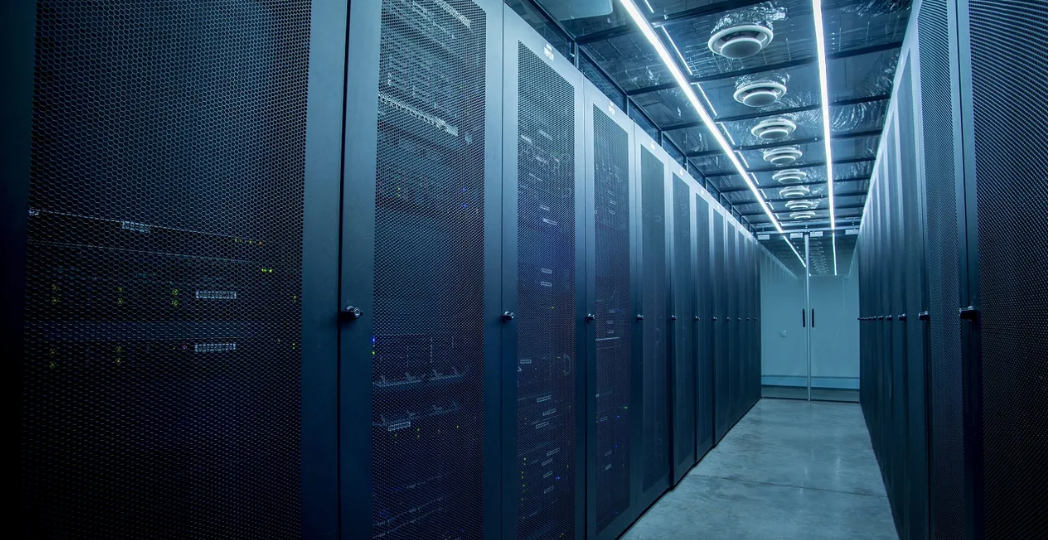
There was also a considerable enhancement that was made by perfecting airflow management methods. With diffuse layouts, cold and hot aisle configurations introduced, more accurate temperature control was made possible.
These designs minimized the heat recirculation in the interior as the cold air intakes and the hot air exhausts were isolated that enhanced the cooling capacity of the designs and reduced energy wastage as well. This optimization became the point of relative shift between the facilities that have fewer server racks and higher power densities.
Another aspect that contributed to flexibility and scalability was the development of the modular cooling units. These can be configured on the areas around the equipment to provide high density zones with area-pinpoint cooling by the data centers. This also enhances efficiency besides being able to support quick changes in infrastructure as the requirements of computing also vary.
Moreover, the technology in heat exchanger has also enhanced the cooling efficiency. Innovations like rear-door heat exchangers and in-row cooling systems helped capture and remove heat more effectively within the confined spaces of server rooms. These systems did not replace the general uptake of energy-saving cooling processes, as it satisfied the performance and sustainability requirements.
One should not underrate the contribution of the advanced surveillance means to the fact that it has made it possible to exercise an even greater control over the environmental factors. Cooling systems were installed with sensors that provided real-time data of the temperature and humidity level so that the operators could make good decisions and achieve maximum performance.
All this has revolutionized the cooling practice therefore offering a new standard of addressing thermal problems in the existing data centers.
Energy Efficiency and Sustainability
The quest to ensure that data center cooling is efficient has resulted in adoption of fresh practices that are in line with the environment and cost-saving objectives. Among the strategies that have been noted is the use of the free cooling systems that use the naturally cool external air in place of the mechanical cooling system to decrease the use of mechanical cooling system.
These systems enable facilities to maintain the right temperatures with the least amount of energy being used when the weather is favorable outside, this is why these systems are a potentially viable means of reducing electricity demand.
There has also been an efficiency gain due to the implementation of direct-to-chip liquid cooling. It is a method that employs using liquid to consume the heat of high-performance components directly, thus considerably decreasing the load exerted on conventional cooling systems. These systems minimize the waste produced as a result of heat sources through acquiring the sources of the heat and offering more effective thermal control to the high-density computing environment.
Besides the hardware-oriented development, software-based solutions have also been developed to bring more sustainability. The current energy management systems also use real-time data to analyze the cooling performance and where they can make changes to enhance efficiency. These tools can give operators tips that can be acted upon and dynamic resources can be allocated and superfluous energy use can be avoided.
Cooling practices have also been affected by the increased focus on the use of renewable energy. Renewable sources like solar or wind power have become part of some of the facilities to reduce the energy demand of their cooling systems. More so, waste heat recovery of the data center activities is becoming a popular trend as a sustainable measure. By-product is used to produce something useful; captured heat is used to power other nearby uses, e.g. district heating or agricultural use.
Lastly, scalable cooling designs and modular designs are becoming popular due to the fact that they can meet varying energy needs. These systems decrease over-provisioning and its inefficiencies by adjusting cooling capacity in relation to actual usage.
This focus on flexible design represents a more general tendency to introduce flexibility and sustainability into data center design and implementation in such a way that the facilities would be able to respond to new energy and environmental requirements.
The Rise of Smart Cooling Systems
The incorporation of sophisticated technologies has changed the concept of cooling systems to be self-installing, self-optimizing. The interrelated sensors can be exploited by smart cooling systems to identify the key parameters including temperature, humidity and airflow in data centers.
These sensors are dynamic and that is why they constantly collect real time information and this will provide a complete picture of the environmental conditions within the facility. Intelligence of these systems is in a position to detect the trends by analyzing this data and detecting the abnormality and make correct adjustments to guarantee that operating conditions are ideal.
The operation of such systems depends considerably on the usage of artificial intelligence. Machine learning algorithms are used to operate the extremely large volume of data produced by sensors, resulting in predictive information and dynamic cooling techniques.
For example, AI can forecast temperature fluctuations based on historical trends or sudden increases in server activity, allowing the system to adjust cooling levels proactively. This prediction capability can reduce the likelihood of hotspots in the thermal process and can also result in efficiency in the utilization of the energy since it is concentrated in the regions of the cooling need.
The other significant advantage of innovative cooling systems is that it allows automating complex processes. Resource allocation is dynamic in that the resources allocated to cooling are distributed efficiently within the facility and this removes inefficiencies in the allocation in a static system. Also, automated controls minimize the use of manual interventions, minimize the possibility of human error, and allow operators to perform higher-level tasks.
There are also those systems which have the energy management aspect that is focused on sustainability and efficiency. The intelligent cooling systems achieve this by optimizing power usage at times of low usage by changing the operations according to the workload requirements.
They can be used together with energy-efficient hardware to make data center operations have a considerably lower impact on the environment. The advanced configurations can add renewable energy sources, and cooling performance will be in line with the overall sustainability objectives.
The scalability of innovative cooling technology is enabled by the modularity of the technology, enabling data centers to introduce these systems as their needs change. This flexibility can easily help facilities to achieve growth without any deterioration in efficiency or performance.
The sophisticated nature of data center operations is a growing issue, and in this regard, the concept of intelligent cooling systems becomes an indispensable resource of optimizing thermal conditions and providing high-quality and stable business performance.
Future Trends in Data Center Cooling
Future trends of data center cooling systems are necessitated by the necessity of increased efficiency, sustainability and flexibility. The future of this technology is one of the new developments in liquid immersion cooling, in which servers are completely surrounded by special non-conductive liquids.
This modality provides a brilliant thermal performance and less power needs an imaginative solution towards the heat production of more powerful computing systems.
The use of new refrigerants with lower environmental effects is also under consideration by emerging cooling solutions as part of the efforts to mitigate greenhouse emissions globally. These refrigerants, combined with energy-efficient designs, are expected to play a key role in achieving eco-friendly cooling practices.
The integration of the artificial intelligence to make systems perform better is another trend that is being developed. Artificially intelligent cooling systems will keep on developing, and they will offer additional accuracy in controlling thermal environments and energy involvement. The use of machine learning models is expected to make optimization possible in real-time, so that cooling systems would run efficiently with different workloads.
Another way that is receiving focus is direct air cooling where innovative airflow designs are employed especially in areas where natural cooling resources are readily available. The designs will make the most of the ambient air and reduce the requirement of mechanical cooling by a large margin.
Cooling is also being impacted by the addition of edge computing. With the rise of decentralized data processing, smaller, localized facilities require tailored cooling solutions that prioritize compact and energy-efficient systems.
In the future, people believe that most facilities will move towards more and more use of modular systems that can be scaled up to growth. It is a trend that is both flexible and responsive to the new thermal concerns of the new technologies, such as quantum computing.
Overall, data center cooling will become more innovative and responsive and it will follow the further events in the spheres of computing dispensation, energy management, and environmental sustainability. The tendencies speak of the modern effort of more innovative and environmentally-friendly solutions in the industry.