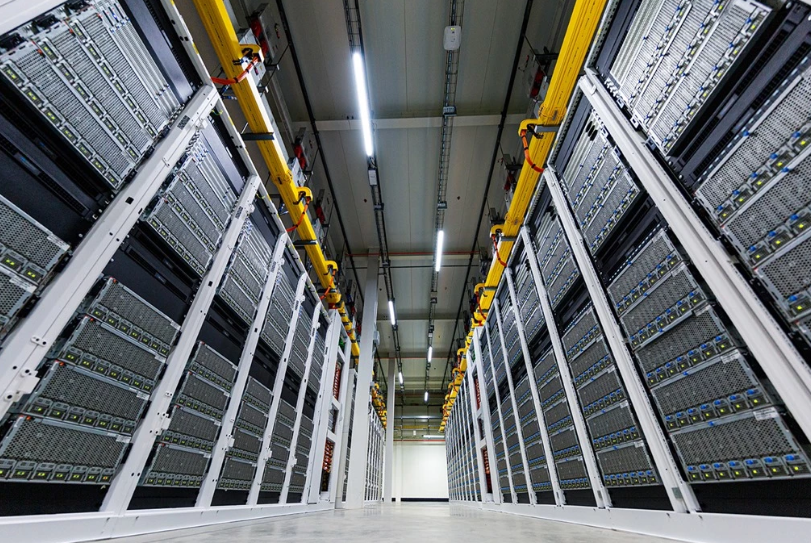
Introduction to Isolated Data Regions
With the ever-changing digital world, companies are continuously looking into ways of enhancing their data management activities. Single data segments have become a common solution to businesses seeking to enhance stability and safety on their systems.
These environments are constructed such that data is isolated in relation to other processes and this leaves a limited environment in which organizations can effectively handle sensitive information.
The physical or logical separation of data presents isolated regions, which are customizable to meet particular operational requirements. The fact that such a setup facilitates compliance with regulations, as well as the fact that it allows the system to be more resilient to possible disruptions.
The rising popularity of such environments is the indicator of the rising significance of the data processes protection and optimization in the world where reliability is essential.
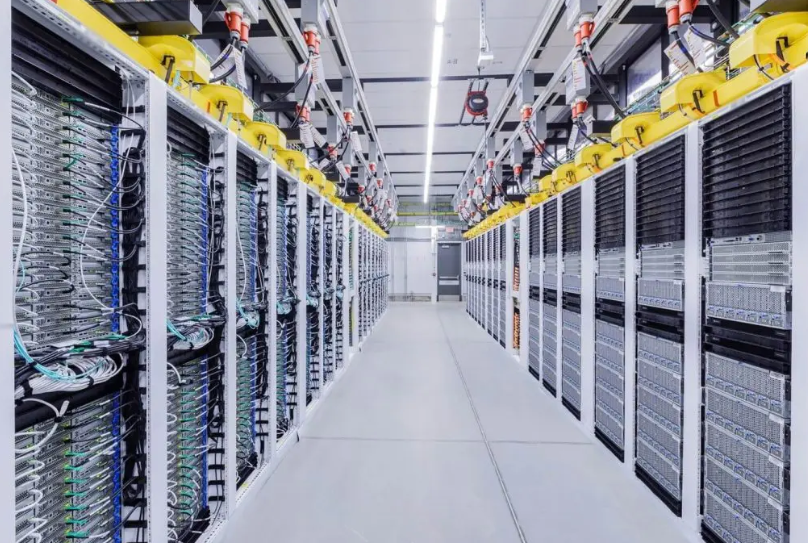
Benefits of Isolated Data Regions
Independent data areas give organizations a chance to maintain their information in a safer and more effective manner. Developing a special purpose environment of certain data allows a business to introduce a specific access protocol with its own increased level of assurance that only approved personnel can be able to operate with sensitive information. This strategy will enhance the security efforts as well as create a possibility to define the data storage and access in a more versatile manner.
The other benefit is that it is able to deal with certain compliance requirements. Industries with heavy regulations will find it easier to comply with data residency, privacy and protection mandates due to isolated data regions.
The localization of data storage among the organizations in specific geographic location or within specific infrastructures can match with the legal requirements and also with the priorities of the organization.
Another advantage is performance benefits. Isolated environments have no chance of conflict with other unrelated processes or workloads and are thus more reliable and fast in retrieving data. The feature is particularly useful to the businesses with large amounts of data or with complex analytics since it guarantees low latency and stable system performance.
Moreover, these areas can be more narrowed to suit the changing organization needs. Scalable solutions (adding storage, changing workflows) can be applied in businesses without affecting the functionality of the larger system. This flexibility sustains the long-term growth but sustaining operational performance.
Finally, the data isolated regions assist in better disaster recovery and business continuity planning. The separation of critical information with other systems helps businesses to develop specific backups and recovery plans shortening the downtimes and enabling speedy recovery in case a problem occurs. It is this resilience that enables organizations to mitigate the greatest values that they have and in the process keep the trust of their customers and other stakeholders.
Stability and Performance
Isolated data regions are a strategic benefit when the organizations are concerned with the continuity of their operations and system reliability. In its design, these environments aim to create separation, and this reduces the chances of overlapping processes or resource demands.
Not only does this separation protect critical workloads but it also is able to optimize the performance of data-intensive applications making them perform at their best.
In the case of companies that handle extensive operations, the consistency of secluded information areas becomes especially useful. They enable systems to be task-oriented ensuring there are no delays or interruptions by irrelevant activities. Such control will reduce the possible bottlenecks in processing even when the demand is high.
In addition, discrete data areas also suit operations in which precision and reliability are demanded. As an example, the streamlined environments that these areas offer are very beneficial to industries that require real-time data processing such as medical, financial and telecommunication industries. Having fewer variables affect the performance, organizations can provide services more predictably and achieve the expectations both of the users and stakeholders.
The other advantage is that it is possible to make changes in system configurations without the threat of unintended consequences. Independent systems enable groups to adjust work processes or to optimize certain aspects without affecting overall processes. This precision is particularly beneficial to data-driven decision-making processes, in which the quality and performance of analytics count.
In addition, isolated environments promote the optimal allocation of resources by default. When data processing occurs in a specific environment, there is no sharing of computing power, bandwidth, and storage with other activities that are not related. This focused application is optimum and in the case that the critical functions are not compromised by the external system requirements.
These areas provide a model that puts dependability in priority when there is no downtime. Businesses can comfortably handle the most crucial operations they engage in as well as minimizing the vulnerability to interference and improve on how they deliver services and business excellence.

Case Studies
Other organizations in other industries have managed to incorporate isolated data areas to meet their specific issues and to meet their objectives. A well-known financial organization in the financial business implemented isolated data is to achieve a high level of regulation and improve its data protection policies. Through such committed environments, the institution managed to enforce stringent data residency controls and kept within the regional law and saved sensitive customer records.
The other example is through the healthcare sector, which required a secure system of handling patient data. The remote data repositories gave the organization a managed environment to store medical records, which made access to data controlled and allowed the organization to meet privacy requirements such as HIPAA. The ability of the system to process important information real time was also enhanced through this method, which is vital in providing prompt care to the patient.
A software firm in the technology sector that focused on big data analytics deployed isolated data regions to streamline its business. The special purpose environments enabled the company to draw off workloads to enhance performance and reduce the latency in data processing of large volumes of information. They customized their data storage and access procedures; therefore, they could guarantee their systems would cope with heavy calculations without latitude.
This strategy has also succeeded in the telecommunications sector. A provider who wanted to handle large amounts of real-time data traffic utilized secluded data areas in order to minimize service interruptions. Their infrastructure was dedicated and thus they could focus on network stability and hence deliver smooth connectivity to their clients even in times when the network is at its optimum.
These use cases showcase how separated data areas can be adapted to suit the needs of multiple industries, both in terms of complying with a specific regulation and in terms of streamlining the operations. These environments provide choice and accuracy, which makes them an excellent resource to companies that wish to retain control and make the most out of the complex data environments.
Challenges and Considerations
Introducing isolated data regions is not an easy task that should be planned carefully because they have specific complexities that must be thought over. The development of these settings can be rather costly in terms of time, resources, and skills. The companies might be required to educate the internal teams or recruit experts to make sure that the infrastructure is deployed and supported efficiently.
The other element that should be considered is cost management. Initial data region setting up costs may be high, together with the current running costs. Companies have to consider the value of the benefits against the cost of the investment, especially to the small businesses, which have lower financial resources.
Also, the process of tying remote data areas to existing systems can be difficult, particularly when it comes to existing infrastructure. The compatibility problems may translate to the additional effort to overcome the differences between the new and old technologies.
The other aspect is scalability. Although it is possible to design isolated data regions to respond to the needs as they change, providing a smooth scalability process without delays can take an additional planning and resources.
Organizations are required to examine the demands in future e.g. higher volumes of data or high processing requirements to avoid the bottlenecks or inefficiencies in future.
The other additional responsibility is regulatory compliance. The compliance with the local and international laws regarding data storage and processing can require the constant surveillance and system revision. Any error in this field may lead to punishment or damage to reputation and it is therefore pivotal to keep up with the rules of law.
Finally, companies must consider the possible trade-offs among centralization versus isolation of data. Isolated environments are good because they improve control but they also tend to form silos that make sharing of data or making collaboration more difficult. Finding a balance between the isolation and the accessibility is especially critical to prevent unwanted restrictions of the working operations.
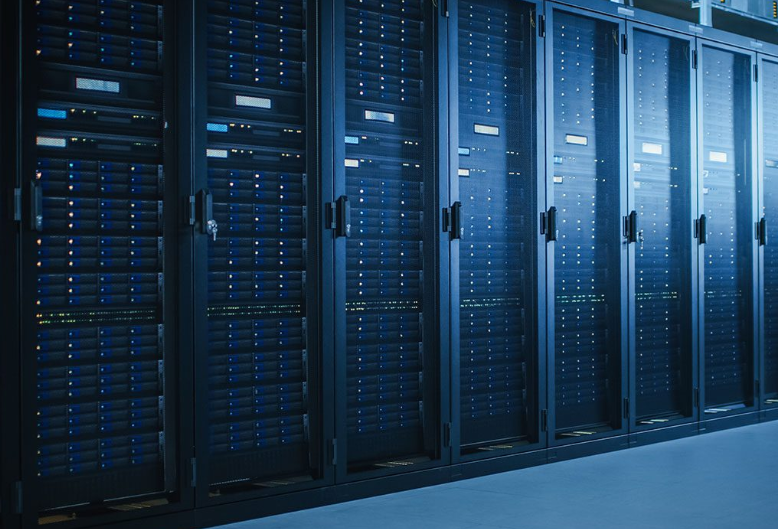
Conclusion and Future Outlook
Moving on, individual data areas will become a more significant part of data management approaches in different fields in the future. These special environments provide a visionary way of dealing with current issues as organizations work to meet the changing security, performance, and compliance needs.
They provide a flexible means of handling complex operations because they can be adapted to fit certain business requirements and, at the same time, can be characterized by high control and precision rates.
The new technological developments, including cloud computing and artificial intelligence, are expected to improve the functions of remote areas of data even further. Through a combination of these innovations, the businesses can unlock the new efficiencies and enhance the ability to scale the operations without any hitches.
Also, these environments can be used as a building block towards ensuring that the global data protection requirements are achieved with confidence as regulatory environments continue to become more stringent.
Cooperation and interoperability will continue to be major concerns in the future of isolated data regions. The necessity to have an efficient data sharing and integration coupled with the advantages of segregation will lead to more sophisticated solutions.
Those organizations, which invest in the overcoming of such challenges, will be in a good position to enjoy the benefits of isolation as much as possible without losing connectiveness and fluidity in operation.
Finally, the increased consideration of stability and reliability in data systems supports the need to consider new methods, such as isolated data regions. Having a well-thought approach and paying a lot of attention to the long-term flexibility, businesses will be able to develop resistant infrastructures that can address the current needs but make them ready to the unpredictability of the data-driven environment of tomorrow.
Upgrade to a hosting environment designed for power, privacy, and reliability, discover the full OffshoreDedi experience and launch your project today.