Introduction to Physical Servers in the Modern Web
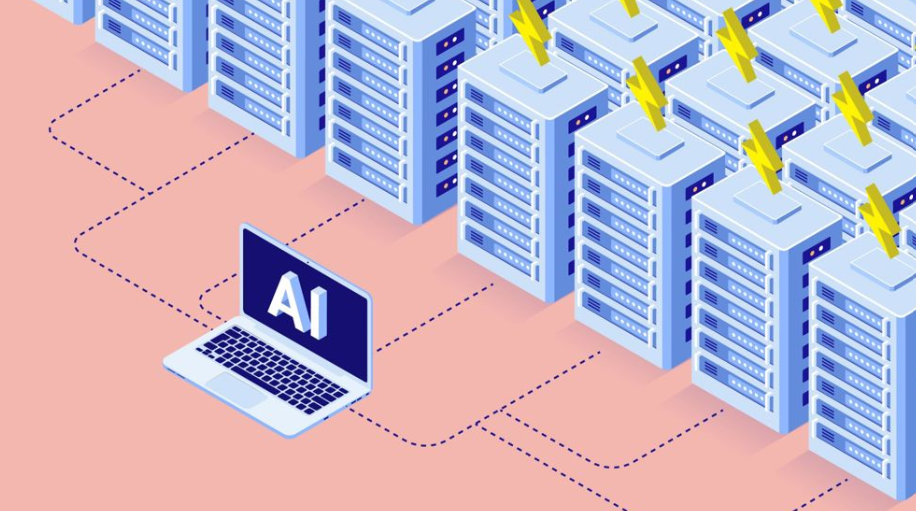
The fast development of the web technologies has placed the physical servers under the microscope of importance. These are hardware components that are in the past the backbone of online systems but are now in coexistence with new solutions that seek to redefine the efficiency and scalability.
Many networks are still powered by physical servers which allow data to be safely stored and processed and this question becomes important in an increasingly AI-driven environment.
Since the industries are venturing into AI to perform complex tasks and to streamline their operations, the infrastructure behind such capabilities becomes as significant as the algorithms themselves. The physical servers that are directly and physically managed provide a degree of reliability and configuration, which cloud-based providers are frequently unable to match. They have been the mainstays of most operations through the years as they help businesses in places where accuracy and safety are required.
Although cloud computing has found a lot of momentum, there is still a tendency to use physical servers when a business has particular requirements, when it needs an on-premise solution or a more comprehensive approach to data management.
Introducing AI into web systems poses challenges as well as opportunities to these servers, which are pushing the functionality into a different neighborhood. With the emerging changes in systems, it is evident that systems complement the AI-driven technologies, and thus, they are not merely the products of the past but the contributors to the current technological change.
Instead of being overwhelmed by the emergence of cloud computing, physical servers are seeking means to survive in hybrid infrastructures.
Impact of AI on Web Infrastructure
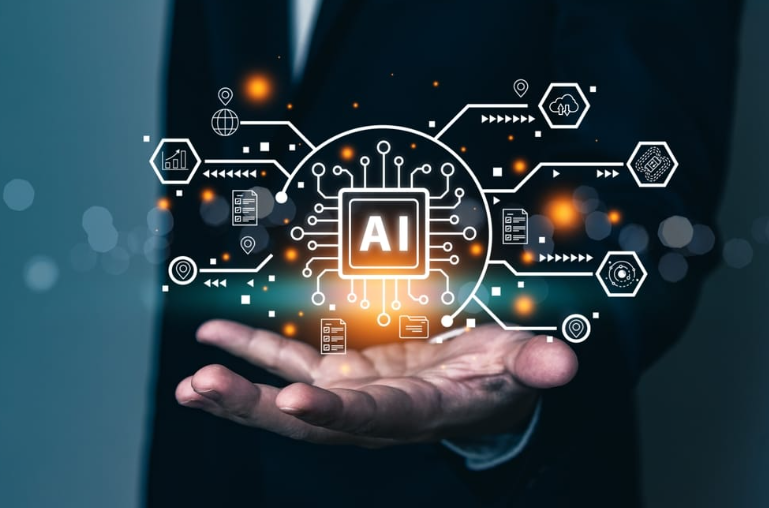
The operation of web infrastructure is being revolutionized by AI, which leads to the creation of systems that can learn, change, and react in real-time. With the introduction of machine learning to it, servers are now able to analyze usage patterns, predict needs, and manage the distribution of resources more efficiently than at any previous time. This proactive control is useful in reducing the latency and enhancing the overall system responsiveness.
The functionality of physical servers is increasingly being enhanced by installing AI-based applications on them. These tools assist in being more efficient when managing energy and they are more intelligent at detecting faults and predicting maintenance which at least reduces the incidence of unexpected failures. AI will increase the working life of physical equipment by addressing the problems before they turn out of control.
The introduction of AI has also triggered server architecture. The designs of the modern world are focused on interoperability, allowing unrestricted communication between the physical and cloud-based worlds.
This change aids in supporting dynamic workloads such that resources are utilized to the areas they are required most. With the evolution of AI, the fine-tuning of infrastructure to adapt to a broad range of applications, including data-intensive ones as well as more lightweight processes, is also being enhanced.
In addition, AI application in cybersecurity has become an essential part of a web infrastructure. With the analysis of traffic patterns and the detection of suspicious behavior, AI can complement the security of the servers, which will be an additional defense against cybercrime.
These developments are strengthening the systems as well as helping lessen the workload on human administrators, who can work on greater tasks, as opposed to be on regular monitoring.
The use of AI technologies is also creating a more responsive and efficient web infrastructure that is disrupting the nature of coexistence and complement between physical and cloud systems.
Advantages of Physical Servers in an AI Environment
Physical servers provide unrivaled reliability in particular situations where there is no compromise to consistent performance. In industries that demand continuous operations like finance or healthcare, physical servers offer reliable basis that reduces the downtime and critical operations of the industry run without hitches.
The other strength is their capability to manage high demand data-intensive workloads with accuracy. It is possible to optimize physical servers to do complex calculations and handle large volumes of data without affecting speed or efficiency. This makes them particularly useful when used in such applications as machine learning training, which requires strong processing and predictability.
The other valuable business case is customization. Physical servers are unlike the cloud-based solutions, which in most cases, are configured to fit the specific needs of a business. Such flexibility will help organizations to match their infrastructure to their objectives and AI-based objectives.
Besides, physical servers may provide a long-term cost-efficiency in a situation when one is likely to use resources frequently. Albeit the initial cost might be more, the lack of a recurring subscription cost, which is generally part of cloud services, may have a financial payoff in the long-term, especially when a company has consistently predictable loads.
Finally, physical servers are necessary so that the hardware configurations can be fully controlled. This control will help businesses to preserve transparency on their infrastructure and therefore they can find the inefficiencies much easier and optimize performance. This is essential especially in AI-oriented settings where even minor inefficiencies can have a major effect on the results.
Challenges Facing Physical Servers
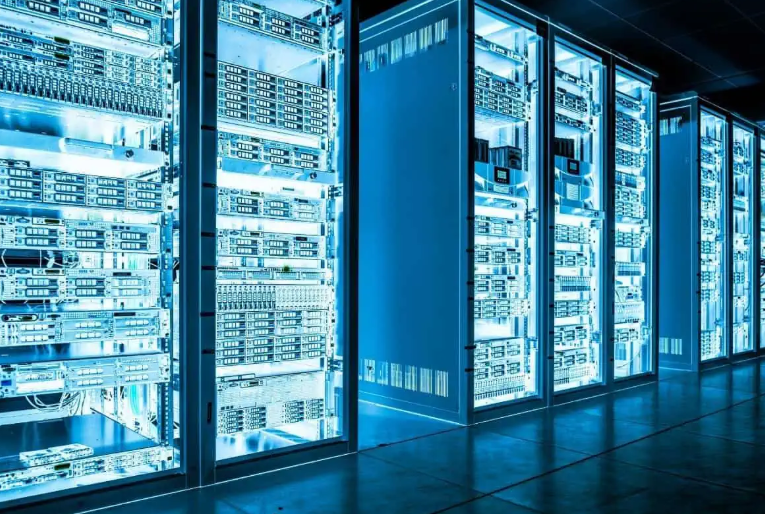
Another important area of concern in physical servers is that they require routine upkeep and maintenance and may lead to straining of IT teams. A dedicated workforce is necessary to ensure that the servers work efficiently and knowledge in dealing with issues that involve hardware. This may be very challenging particularly when dealing with smaller organizations with few resources.
The next challenge is that they are not as scalable as cloud solutions. Physical servers are very costly to plan and invest in increasing the capacity and in this regard, slow down the speed at which a business can react to abrupt demand changes. This inflexibility may negatively impact growth and competitiveness in markets that are fast changing.
The problem of energy consumption is also urgent. The size of the electricity consumptions of physical servers, especially those with intensive workloads, can be very high to run and cool. This not only comes with the cost increment, but it also raises issues regarding environmental sustainability, whereby companies are under increased pressure to ensure that they diminish their carbon footprints.
Security management is also another problem, the physical servers will require strict measures against breaches. They offer high level of control but the ownership on the implementation and maintenance of protective measures is left to the organization. Any failure to undertake these steps may expose a system to cyberattacks, which have expensive consequences.
Finally, new technologies are constantly introduced, and businesses have to struggle with the possibility of the incompatibility of the old server hardware with the needs of new applications. This disjuncture may be a cause of inefficiencies in performance, which would need huge capital investments to overcome.
The hardware upgrade does not only come with the financial expense, but it also entails the downtime and this makes it even harder to the company that depends on the constant provision of services.
Hybrid Approaches to Server Management
To meet the needs of the contemporary infrastructure, organizations are moving towards incorporating hybrid systems that combine the physical servers with cloud-based systems. The approach is flexible as it gives enterprises the opportunity to assign certain workloads to the most suitable environment.
An example is to have sensitive applications or data that has to be very stringent on the physical server whereas less important or varying jobs are processed under the cloud.
A hybrid method enables firms to control expenses more efficiently and make the most of performance through allocating workloads depending on their individual needs. In the case of AI-based processes, it would imply taking advantage of the strength of physical servers in making intensive computations and cloud environments in scaling during the peak of the demand. Such allocation of activities makes resources to be utilized effectively without being depended on a single type of infrastructure.
Hybrid arrangements also favor easier assimilation of new technologies. As AI is expected to transform web systems, organizations must have systems that can handle the legacy applications as well as the more innovative solutions. The hybrid environment guarantees interoperability of the physical and cloud system to ensure that the businesses are easily adapted to the altering technological environment.
Also, the hybrid models offer superior disaster recovery. With critical systems being maintained on physical server and data replication in the cloud, businesses will be able to experience higher degree of redundancy and reduce downtime in case of any failure. The layered strategy is used to provide a balance between reliability and scalability to allow the operations to continue, even during difficult situations.
Future Predictions for Physical Servers
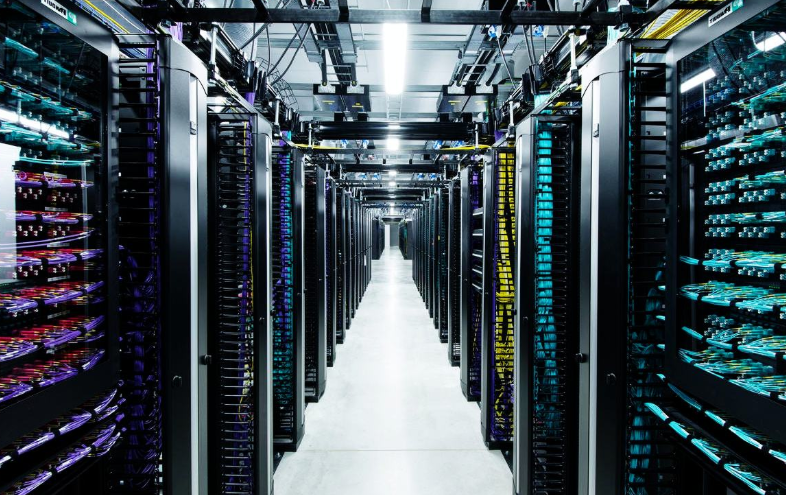
Their future functionality will probably be focused on the capacity of physical servers to supplement the development of AI and the development of web infrastructure. With the increasing demands of faster, reliable and energy efficient systems, the physical server can go through a tremendous design improvement to meet the demands.
Even hardware innovations, e.g. adding components optimized by AI, would enhance their capabilities in performing complex calculations and consuming less energy.
Among the focus areas, the evolution of smaller and more effective designs will allow the idea of utilizing resources better and decreasing the physical presence of the data centers. Innovations in cooling technology can also be very significant and can help reduce the environmental impact of the server operations and compatible with the global sustainability objectives.
With more and more attention directed at businesses regarding their energy consumption, the physical servers with less power will become a priority.
Another force that is influencing the future of physical servers is the development of edge computing. With servers situated near the end user, organizations can accomplish a faster processing of the data and reduce the latency of application that need a real-time response such as AI-driven analytics and IoT devices. This change will probably lead to demand of specialized hardware that is designed to help with edge deployments.
Besides, security will be a fundamental concern, and physical servers will have more sophisticated mechanisms of guarding confidential data. With more advanced threats on the rise, the implementation of AI-based security solutions directly built into server hardware may become a feature, and safer against the changing risks.
The hybrid model is also expected to keep on spreading, and physical servers are one of the significant elements of the strategy. Their on-premise solution will be related to specific workloads and by providing tailored solutions, they will be relevant in the varied infrastructure environment. Physical servers will not disappear in the web ecosystem as they continue to adapt to the dynamic technological landscape.