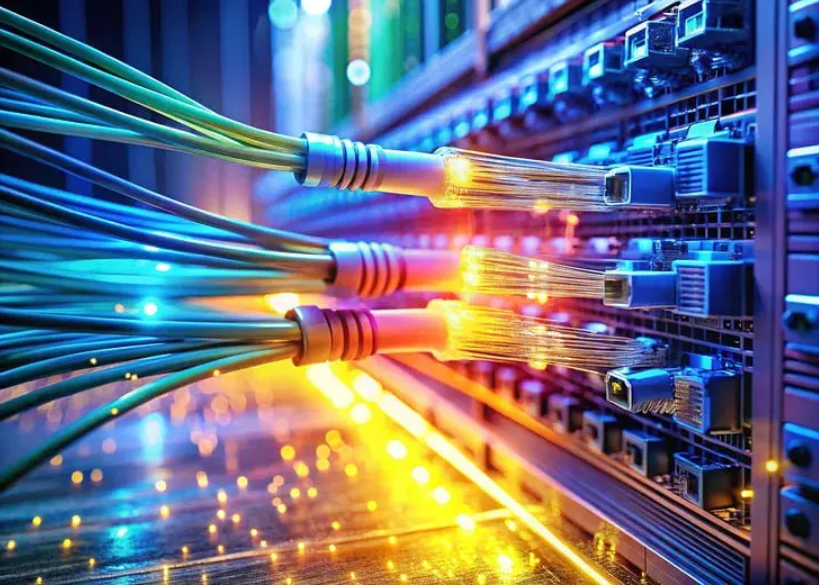
Introduction to Network Queue Delays
Network queue delays are one of the most significant dilemmas during the management of servers, which could impede the seamless data processing. These delays occur when data packets are made to queue in order to be processed which is very detrimental towards free flow of information. In contrast to instant transmission, queued data has to wait until the resources become available, and the effect of this may be the reduction in the responsiveness of the whole system.
Network queue delay mechanics are closely related to server processing of the incoming data traffic. In the event of the capacity of a server being surpassed, packets are stored waiting to wait until the system becomes capable of providing the required resources to serve them. This queueing may occur at different locations within the network such as routers, switches and the server itself. Delays of this kind manifest particularly during busy seasons when the amount of traffic is too large to support a smooth flow within the network.

Understanding Network Delays
The identification of the cascading effects of network queue delays is one of the most important elements of the study of network queue delays. When a bottleneck is created, other packets entering the network can be faced with an even larger delay causing the problem to become even more aggravated. It could be compared to a traffic jam in a highway, as when there is congestion, then the rate of movement reduces to all those who are trying to pass through.
In the contemporary digital setting, these delays are especially sensitive, as the real-time applications and services become increasingly dependent. Even online transactions, collaborative tools, and video streaming are only some examples that even the slightest delays in the data transmission can be problematic.
To businesses, such delays cannot be solved through a simple technical dilemma but a crucial move in ensuring that the business fulfills the expectations of users and operational reliability. Knowledge of the basics of network queue delays offers a basis upon which mitigation strategies of these delays can be studied.
How Network Queue Delays Occur
Network queue delays occur when it stalls the data packets in a queue as a result of a short-term unavailability of resources that would be required to process it immediately. Such delays are usually caused by congestion in the network and these congestions are usually brought about by the situations in which the demand is higher than the capacity. As an illustration, lack of bandwidth may cause a bottleneck because the network may be unable to cope with the amount of traffic of data passing through it.
Delays may also be caused by certain infrastructure issues. The problem with outdated hardware (and this could be older routers or switches) is that it might not have the capability of managing the current data load promptly and results in queue problems. In the same way, inadequately set up networks or absence of load balancing systems may worsen the situation by not spreading traffic evenly among the free resources.

Network Traffic Spikes
The times of maximum traffic are especially susceptible to causing delays. Sudden spikes in traffic can be caused by events that are high demand including seasonal online sales or a much-hyped update of a software. In such instances, the flow of information congests the network with the ability to handle the request, and the packet forms a queue until the resources are available. Inefficient routing or poor design of the network can also contribute to these delays making packets take more time to reach their destination.
These problems affect cloud environments and virtualized systems that are no exception as they are based on shared resources to manage multiple workloads at the same time. The delays may occur when these systems are heavily utilized with workloads competing with each other in terms of power or storage space. Also, networks that are not scalable or do not respond dynamically to the changing traffic patterns are more likely to experience a long queue.
It is important to understand these factors so as to address the underlying causes of the delays in network queues and seek solutions to mitigate the pressure on servers and other important network devices. This awareness would see to it that proper solutions can be put in place to maximize on performance and minimize chances of delays that may cripple the operations.
Effects of Delays on Server Performance
When delays in the network queues occur, it interferes with data flow causing evident falls in the performance of the servers. Servers with constant delays will be unable to handle the requests properly leading to a chain effect of affecting the overall functionality of the system. To end-users this may end up being slow down response time, thus making them not achieve a smooth interaction with web pages, applications or any other online services.
Among the major effects of these delays is the rise in latency. The time taken to process user requests increases as the data in queue waits to be processed. This is particularly a problem with applications that use a real-time interaction like video conferencing or online gaming. In the case of a long latency, usability may be drastically impacted, as it may not be easy to involve users in such setting without interruptions and frustration.
Outside latency, data processing delays impose extra load on the server resources. Large numbers of packets in queue may lead to congestion of processing power and memory allocation overloading the system capacity to service workloads. This may create a domino effect on performance with delays increasing with time thus becoming more difficult to recover during periods of heavy use of the network.

E-Commerce Facing Delays
Companies that deal with such industries as e-commerce or media streaming are especially affected by the consequences of network delays. To illustrate, a streaming service that has been having frequent buffering issues would lose all of its consumer satisfaction, and an online store that has a slow-loading product pages would lose the possibility of selling products. Even minor delays in such industries, not only will have ripple effects on the user experience but also on to key performance indicators including conversion rates or retention.
In addition, the network queue delays tend to worsen the service level agreement (SLA) problem. Failure to observe agreed standards of performance can attract monetary penalties or mistrust in a customer. Because the demand of the users and reliability continues to grow, failure to respond to such delays can put business at a disadvantage and it is better to manage servers and networks proactively to prevent such disruptions.
Strategies to Mitigate Network Queue Delays
In order to reduce the delays in network queues, both intelligent planning and sophisticated tools are needed to enhance the traffic flow. Among the methods that have been shown to be very effective is the upgrading of the hardware equipment in the network capacity by improving the hardware equipment including routers and switches to ensure they can effectively accommodate a greater amount of data. The current hardware is more capable of handling the large amount of traffic with it not causing any unnecessary bottlenecks, and therefore the hardware can perform smoothly even at peak times of the day.
The other important measure is to adopt traffic management measures, including traffic shaping and traffic prioritization. These practices prioritize important packets by giving them more priority such as video calls or online transactions that require transmission; hence, important packets are completed fast enough without resulting in undue delays.
Dynamically allocating resources to networks can also contribute to the problem of abrupt increases in usage, ensuring that a constant stream of data is present, and that there is no risk of congestion.
Techniques of load balancing are also very important in reducing delays. Load balancing removes the possibility of certain resources being overwhelmed by traffic by spreading the load across a number of servers or network paths. This is a plan that does not only minimize the queue time it also increases the overall system reliability since the workloads are distributed more efficiently.

Benefits Of Monitoring Tools
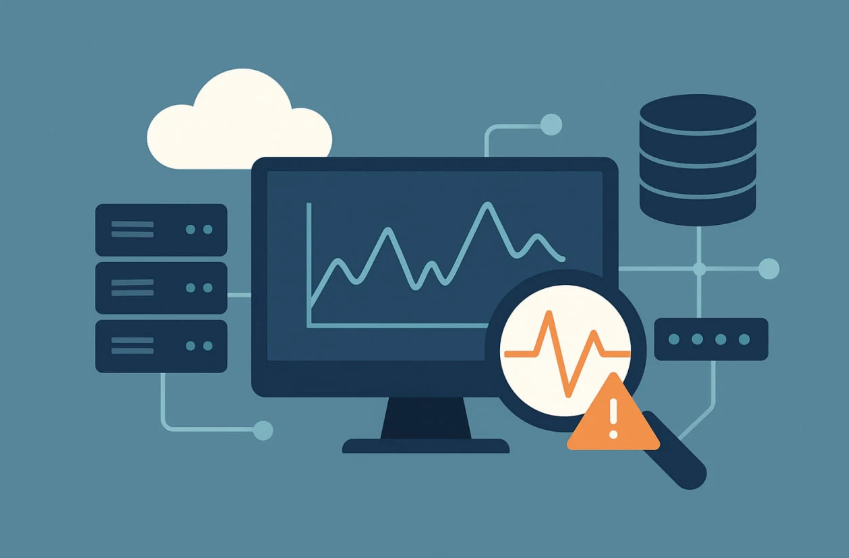
Monitoring tools also have the added benefit in detecting and addressing delay. These tools will help the IT teams know the behavior of the network in order to identify abnormal traffic patterns or possible bottlenecks in the real-time. Early identification of problems means that remedies that may happen like diversion of traffic can be put in place or configurations can be corrected before delays can cause excessive.
Also, decentralization of data through distribution systems such as content delivery networks (CDNs) can reduce delays by a large amount by storing data on more decentralized systems and moving information to the end-users. This helps save the distance that data have to traverse hence resulting in shorter processing time and performance by the users.
The application of the aforementioned strategies will assist organizations to control traffic requirements and the performance of the servers as networks continue to advance, creating a responsive and steady environment to the end-users.
The Future of Managing Network Queue Delays
With the emergent technology, the solution to network queue delays will be better and will have more strength to solve the congestion problem. As the era of artificial intelligence and machine learning progresses, networks can use predictive analytics to know possible bottlenecks before they arise. This is an active measure to enable systems to become dynamic and the flow of data become smoother even in case there is high demand.
Adoption of 5G networks is a major innovation towards the mitigation of delays. Higher data transfer rates and lower latency rates positively show that 5G technology will be able to manage more volumes of traffic at a higher efficiency, which is a crucial resource in terms of dealing with the increased demands of real-time applications.
On the same note, edge computing is transforming how data is computed by taking the processing resources close to the end-user. This decentralized model minimizes the distance that data has to cover which also minimizes the delay and better responsiveness.
The future of delay management is also significantly played by automation. Organizations can reduce the manual intervention and react faster to the changes in the network by automating some of its key processes like traffic rerouting and resource allocation. This will provide a smoother user experience and will also guarantee a steady flow of the server.
Conclusion
In addition, with the ongoing development of cloud computing, a solution in the scalable infrastructure will further mitigate the risk of overload. With the adoption of hybrid or multi-cloud approach, businesses will be able to allocate workloads on many environments thereby avoiding congested systems and enhancing their overall performance.
Such technological solutions, along with the changes in the field of network monitoring and analytics, will help organizations achieve high rates of reliability and efficiency. These solutions are futuristic and can enable businesses to have resiliency in their networks to achieve the continuously increasing demands of users in a digitally connected world.
Keep your servers responsive even under heavy traffic. Choose OffshoreDedi to minimize network queue delays.