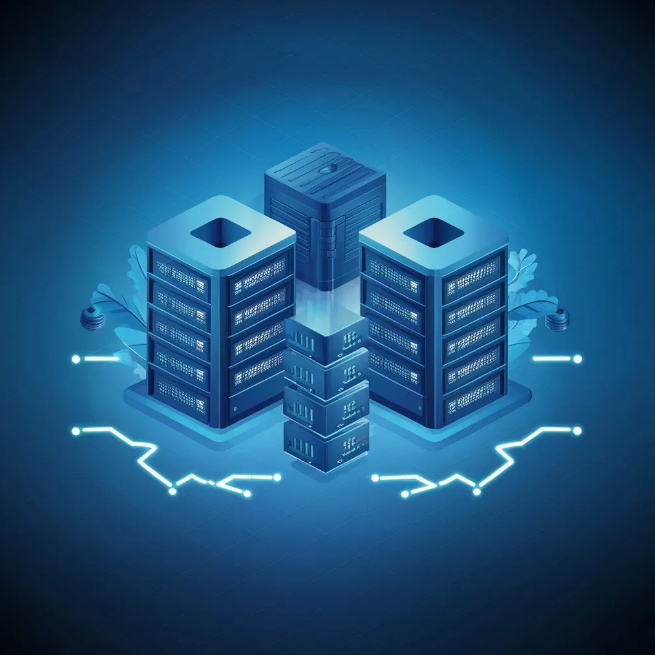
Introduction to Single-Node Servers
The single-node servers can be seen as a viable solution in the initial infrastructure stage of IT infrastructure. The servers are independent devices and all processing, storage and networking processes are performed by one machine. This arrangement is simple and may be adequate in small-scale sets ups with few requirements. Single-node servers can be attractive to small companies or startups because of simple setup, which is less expensive than more complicated architectures.
But with expansion of businesses and increasing complexity of their needs, single-node servers start to show some limiting nature. This kind of server configuration is not flexible to quickly respond to changes in demand or an increase in user traffic. Single-node servers are also unlike distributed systems which may distribute tasks over multiple machines. Such dependence develops a fixed framework that finds it difficult to adjust to the growing workloads.
Moreover, single-node servers need everything to use a single computer, which is likely to be inefficient. Once there are several applications or tasks running at the same time, the resource management capability of the system can reduce very fast. This would give rise to conflict of tasks competing on few resources resulting in low performance.
Single-node servers are centrally designed such that their design philosophy puts simplicity over scalability and resilience. Although such a strategy can be effective at an early stage, companies have to pay close attention to the fact that such systems have to correspond to the long-term growth and performance needs.

Scalability Challenges
With the growth in the demand, the fixed capacity of a single-node server serves as a limiting factor to the growth in no time. These servers do not support the distribution of workloads across more than one machine as is the case of systems that are meant to expand. They are instead limited to the capabilities of a single hardware. This inflexibility renders it difficult to adapt to a change in the traffic or an increase in the number of users.
The common method of adding resources to a single-node server is through upgrading of individual parts, e.g., memory, or processing power, but these upgrades are limited. After some threshold, expansion of the server hardware is physically constrained. This may result in the situation where the server in question is just unable to cope with the additional workload no matter how many resources are added.
The other barrier that could be witnessed is when the businesses have unpredictable traffic flow or seasonal peaks. Single-node servers are unable to handle such changes at rapid rates, and in most cases, performance becomes sluggish during the high periods. This may cause slowdown due to a failure to allocate resources dynamically to meet demand and hence user satisfaction.
It is also lacking in flexibility which discourages innovation and growth. As an example, a single-node server may not be capable of providing the resources needed to launch new services and applications. Due to this, companies have a difficult time deciding either to trim down their plans or to invest in complete new systems. This difficulty highlights the nature of the inherent limitations of single-node architectures with regard to scalability.
Performance Bottlenecks
As several processes take resources that are shared in a single-node server, there is a tendency of performance problems. This situation is especially troublesome at times of high traffic when the capacity of the server is stretched to the maximum. Failure to effectively plan the allocation of the available resources may create latency where a task may take increased time to execute thus frustrating the user who anticipates a prompt response.
The most prevalent is that resource competition among applications may lead to slowdown in the system. To illustrate, when a number of resource-heavy activities are being run simultaneously, the server might not be able to allocate its computing power efficiently. This may lead to sluggish operations which can affect even database queries as well as file uploads. Also, because the resources are not redundant, a small inefficiency can cause an impact on the system, further deteriorating performance.
The workload on a single node server is becoming more pronounced as the user activity increases. Each new user request causes extra load on a CPU, memory, and storage that are already operating with the maximum load. This accumulation causes a bottleneck effect whereby the whole system cannot handle tasks at a good rate. In the long run, the wear and tear of the hardware can also be induced by the constant stress, thus reducing the lifespan of the server.
In addition to this, single-node servers also have this weakness of not being able to sustain peak traffic. In case of unexpected surge in demands, the server might not be in a position to maintain up with the surge and thus causes load delays or dead connections.
This non-responsiveness may severely affect the satisfaction of the users and even send the customers to other companies that have better systems. The limitations with managing growing workloads are the highlight of the negative issues of utilizing single-node server architecture only.

Reliability Concerns
The absence of redundancy can be a major risk to businesses when a business is using single-node servers. All operations are centralized and hence all malfunctions and problems that appear within the system can spread throughout the entire system bringing about total blackout. As opposed to distributed systems that distribute the workload and maintain a back up with more than one node, single-node setups are not so safeguarded against complete failure.
Such a centralized form of organization also prevents the possibility of a rapid response to an unplanned event. Be it due to hardware breakages, software failures or security attacks, problem solving, in single node server, usually consumes longer periods than in systems with failover systems. This downtime can cause the businesses to be exposed during the periods when very important operations are undergoing, which can result in operational disturbance and dissatisfied customers.
Single-node servers also rank high in the likelihood of data loss. Securely backing up storage can ensure that in case of a storage failure or corruption the recovery options are not so limited. This makes it a weak environment and one issue will jeopardize vital business information. Also, the likelihood of experiencing performance-affecting failures with increased workloads and the system is functioning near the maximum capacity is likely to increase.
Reliability challenges are also worsened by external threats like cyberattacks. A server that is connected to one node and is faced with a heavy load might not have the resources to monitor and react to such threats properly and leave systems vulnerable to the possibility of a breach.
Compared to having the necessary capacity to implement monitoring of potential vulnerabilities or manage mitigation, business is exposed to an increased risk of lengthy outage or loss of the security of data.
Cost Implications
Experience shows that single-node servers offer difficulty in managing costs as they are used to sustain increasing activities. Due to demand changes, it is common to encounter occasions where businesses have to upgrade hardware resources such as processors, memory, and storage.
These upgrades can also be quite expensive and have diminishing returns although they may be able to increase performance in the short run. In due course, the physical limits of the server machines become such that additional upgrades are no longer practical, and the organizations face sunk costs as well as little means of scaling up in the future.
Also, single-node servers will need significant investment into maintenance and monitoring. Any malfunction of the hardware requires immediate repair or replacement which may disturb the operations and burden the budgets. Such unexpected costs contribute to the financial cost of the long-term commitment of keeping a single node system.
Additionally, the power consumption of the server when it is running and cooling down can be more and more expensive with the nearing of the capacity limit, further contributing to the high cost of operation.
Contrary to that, the contemporary solutions, such as cloud-based infrastructure or multi-node systems, provide a more cost-effective resource distribution. These solutions minimize the reliance on a single machine, which enables businesses to increase their usage depending on the real time demand.
The issues of over-provisioning and under-utilizing resources that are common with single-node setups can be avoided using this model. There is also the use of cloud and distributed systems that usually involve automated upgrades and lessens the amount of labor and time spent.
Although single-node servers might appear cost effective in short term, they tend to have cost implication that supersede short term cost savings in the long term. Firms that are dependent on this strategy tend to experience soaring expenses in relation to performance constraints, repairs, and upgrades.

Alternatives to Single-Node Servers
Research on other options to single-node servers can enable businesses to solve their growth problem using more efficient and scalable means. The multi-node systems share the workloads among multiple machines, making one server less burdened.
This increases the performance and reliability, since tasks are shared and resources may be dynamically distributed to satisfy demand. Moreover, the multi-node configuration can be characterized by redundancy, so one of the nodes fails without interrupting the general processes.
Another suitable solution that a business can use to stop using single-node servers is the cloud-based infrastructure. Using cloud services, organizations have the ability to increase and reduce resources as and when they are required.
This scalability also means that there is no need to upgrade hardware with costly hardware or to run out of physical server capacity. The maintenance, updates and security are also usually handled by cloud providers which lessens the burden of operational work on internal IT personnel.
Multi-node systems as well as cloud solutions allow them to effectively manage the unexpected increases in traffic without affecting performance. These architectures are also programmed to accommodate fluctuated workloads and thus they suit businesses with uncertain growth tendencies. Also, modern platforms typically come with sophisticated monitoring instruments, which allow organizations to streamline its usage of resources and avoid bottlenecks before they take place.
Conclusion
In the case of businesses that are interested in the safety of their data, hybrid models or private clouds may add extra control but retain the benefit of scale of distributed systems. The configurations enable sensitive information to stay on-premises and use the cloud resources to take advantage of operations that are not vital.
When companies abandon single-node architecture, they will be able to attain an IT infrastructure that is robust, scalable, and cost effective. Switching to multi-node or cloud, not only solves the technical difficulties of growth, but also puts businesses in a position to innovate and grow without worrying about them violating capacity limits all the time. These options would hold the business prepared to meet the future needs as well as providing businesses with consistency and reliability.
If your business is outgrowing single-node servers, OffshoreDedi delivers resilient infrastructure designed to scale without failure, get started today.